
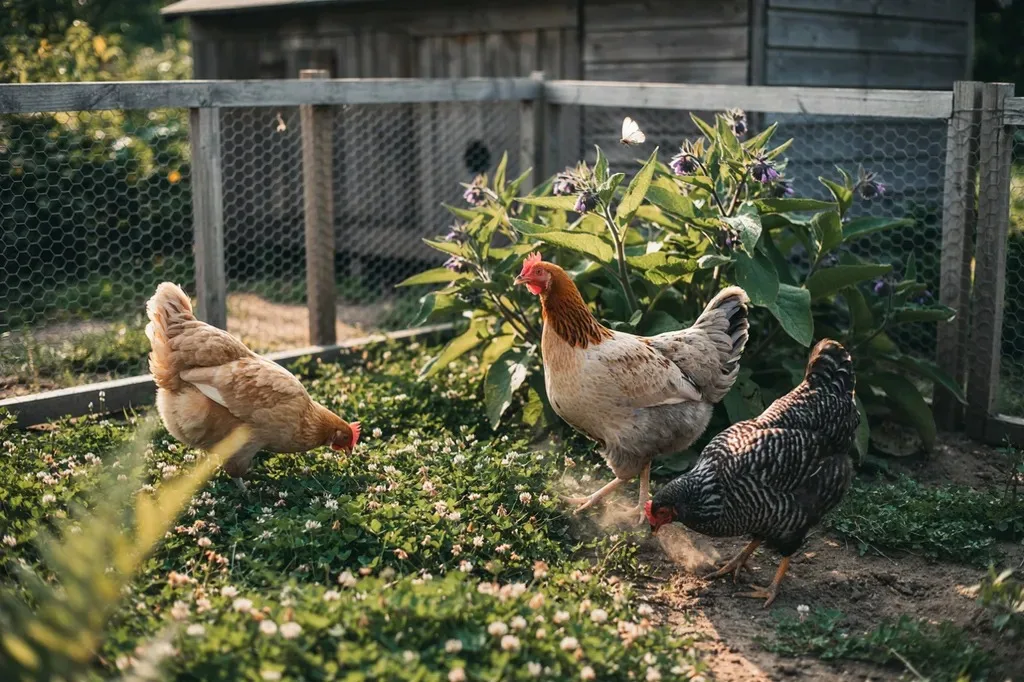
How These Plants Fit Into Your Hens’ Diet
Think of perennial plants as a free buffet on top of a balanced layer feed, not a replacement for it. Hens still need steady protein and calcium every day. What these plants do is add fresh greens, seeds and fruit at no cost, keep your flock busy, and make the bag last a bit longer.
And because they come back every year, the work is done once. They are one of 7 ways to feed chickens for free.
1. Mulberry Tree
If you can only plant one thing for your chickens, plant a mulberry. In early summer it drops ripe berries for weeks, and if it hangs over the run, your hens will wait underneath it. The leaves are edible and nutritious too.
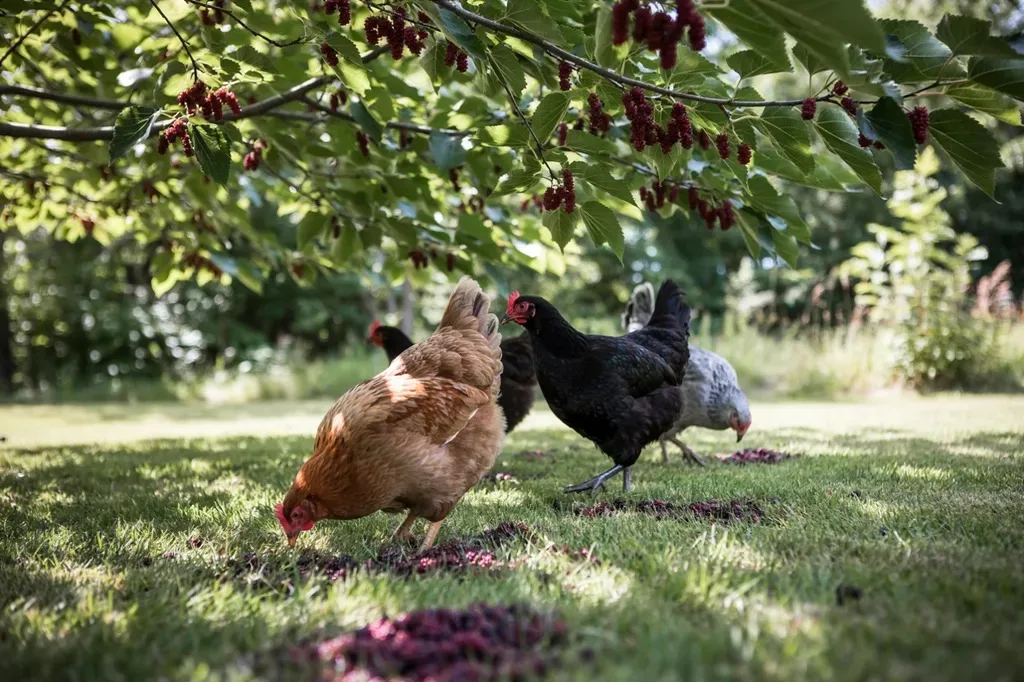
Mulberries grow fast and are hardy across much of the US. A warning for keepers with white hens: the berries stain everything purple, including the droppings. It’s harmless.
2. White and Red Clover
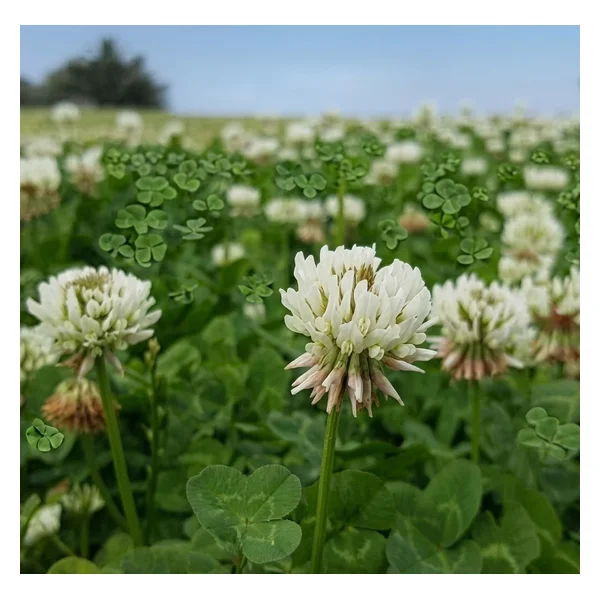
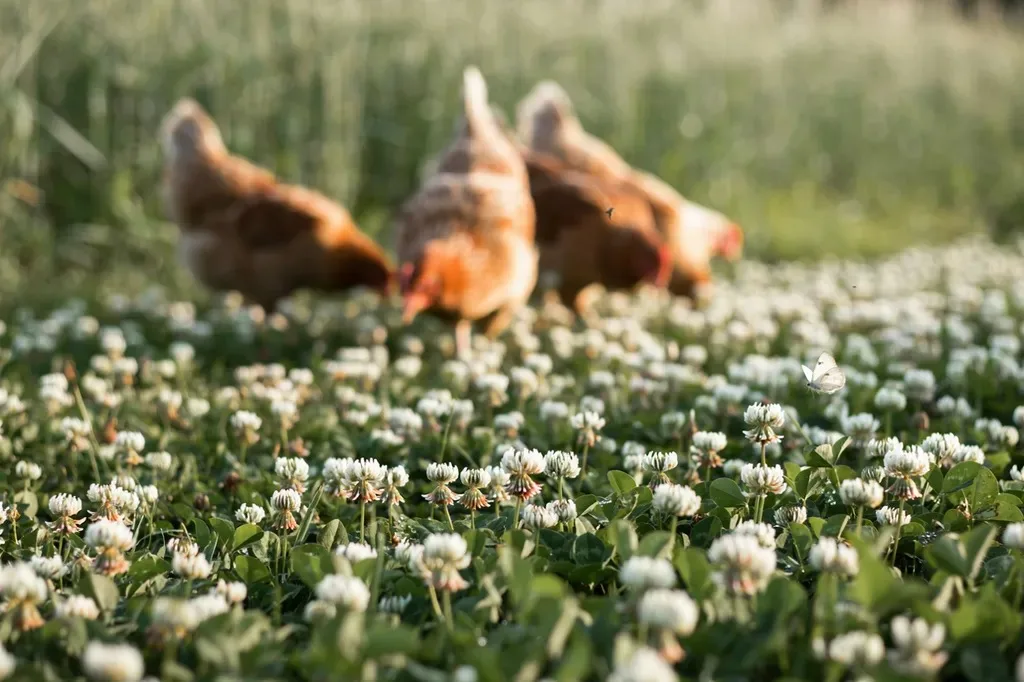
Clover is a perennial legume, so it feeds itself nitrogen from the air and comes back thicker every year. Hens love the tender leaves and flowers, and it’s one of the better sources of plant protein you can grow.
The problem is that chickens scratch a patch bare fast. The fix is a grazing frame (see below), which lets them eat the tops without destroying the roots.
3. Dandelions and Chickweed
The weeds you pull from the garden are some of your hens’ favorite foods. Dandelion leaves and flowers and soft chickweed are both packed with nutrients. They come back on their own every year.
The only rule: never feed weeds from a lawn treated with weed killer or chemicals.
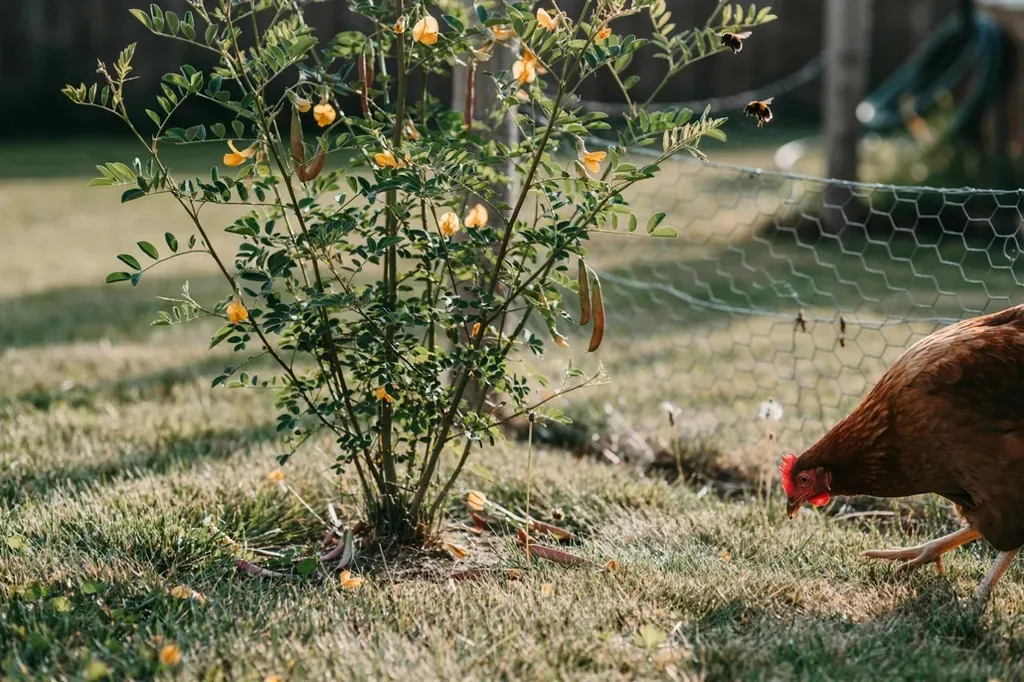
4. Siberian Pea Shrub
This tough shrub survives brutal winters, thriving in some of the coldest parts of the country. In late summer its pods split and drop small peas, and chickens scratch them up from the ground. It’s a nitrogen-fixer, so it improves the soil around it too.
5. Comfrey (Handle With Care)
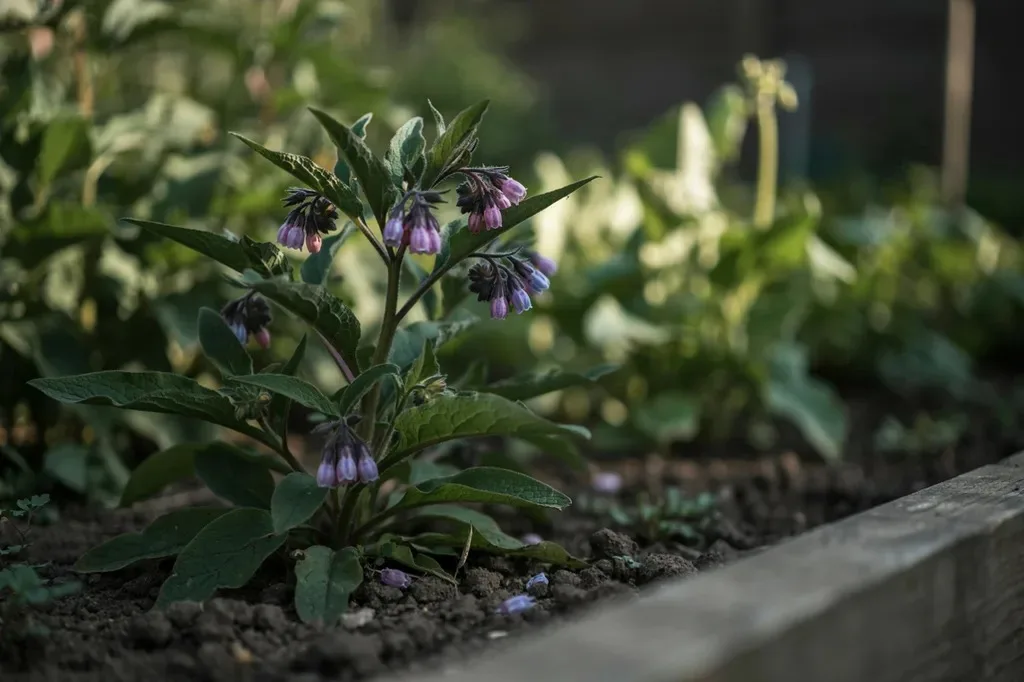
Comfrey is the plant behind many of those “replaces all chicken feed” videos. It grows huge leaves that come back after every cutting, and it’s often praised for being high in protein. Many homesteaders grow it for chickens.
Here’s what the videos skip: comfrey contains natural compounds called pyrrolizidine alkaloids, which can harm the liver if eaten in large amounts over time. That’s why careful keepers treat it as an occasional green, not a daily staple. If you grow it, choose a non-spreading variety such as Russian comfrey ‘Bocking 14’, and feed it in small amounts mixed with other greens.
6. Amaranth
Amaranth is technically an annual, but it drops so much seed that it often comes back on its own the next year. The leaves are a nutritious green, and the big seed heads can be hung in the run in fall for the hens to pick apart.
7. Sunflowers
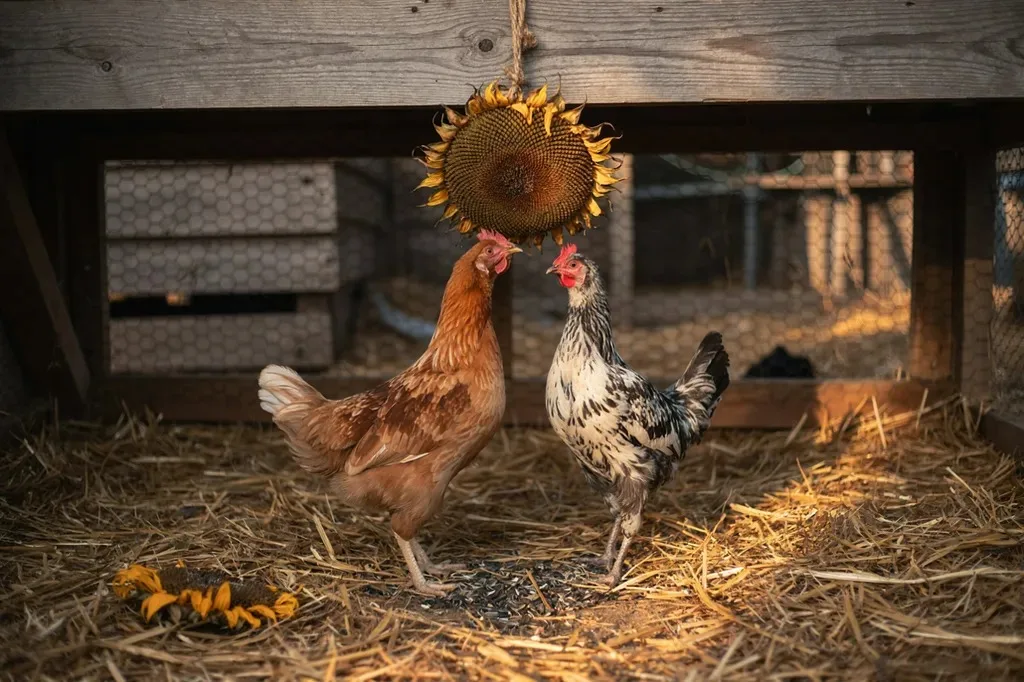
Another annual that often reseeds itself. Leave a few heads to dry on the stalk, then cut them in fall and hang one in the run. Your hens will strip it seed by seed, which keeps them busy for days.
8. Moringa (Warm Climates Only)
Moringa is a fast-growing tree with small leaves that are very high in protein. It’s perennial only where winters are frost-free, such as the warmest parts of Florida, Texas and California. Everywhere else it’s grown as a summer annual or in a pot brought indoors.
Where to Plant: The Chicken Garden Layout
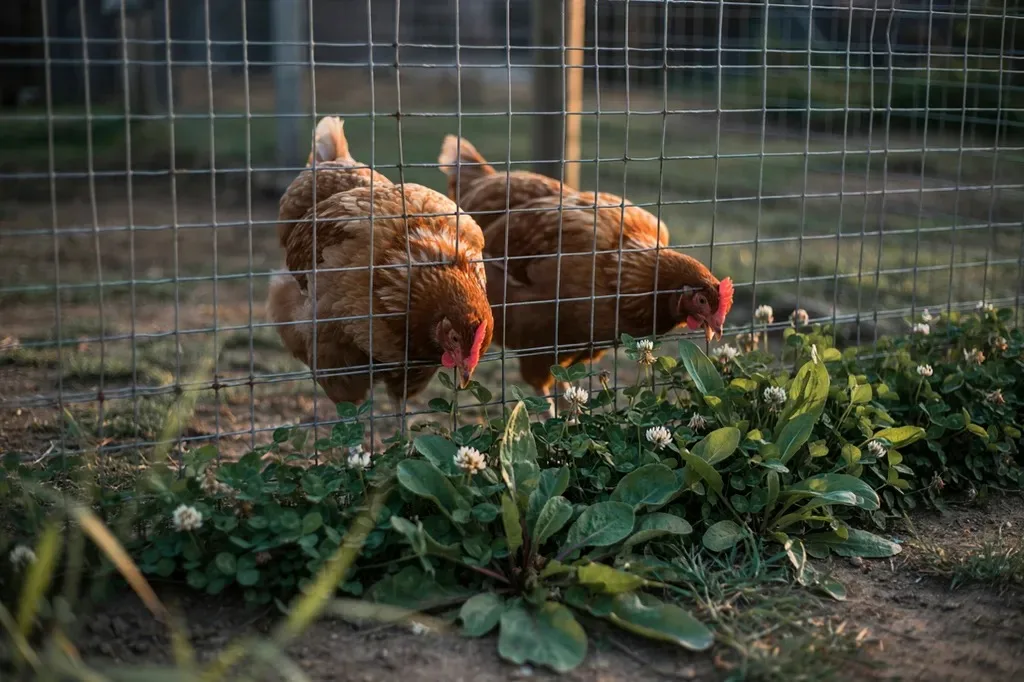
The smartest layout puts the plants just outside the run, not inside it. Plant along the outside of the fence, and the hens eat every leaf that grows through the wire while the roots stay safe.
- Along the fence: clover, comfrey and greens that grow through the wire.
- Over the run: a mulberry tree that drops fruit inside and gives summer shade.
- On the cold side: shrubs like Siberian pea shrub that block the winter wind.
- In a spare corner: sunflowers and amaranth for fall seed heads.
How to Start on a Small Budget
- Mulberry: grows easily from cuttings, so ask a neighbor with a tree.
- Comfrey: spreads from small root pieces, and one plant soon becomes several.
- Clover: a bag of seed covers a large area for very little.
- Dandelions and chickweed: already free in most yards.
- Sunflowers and amaranth: save a seed head each fall and replant.
The Grazing Frame: How to Keep Plants Alive
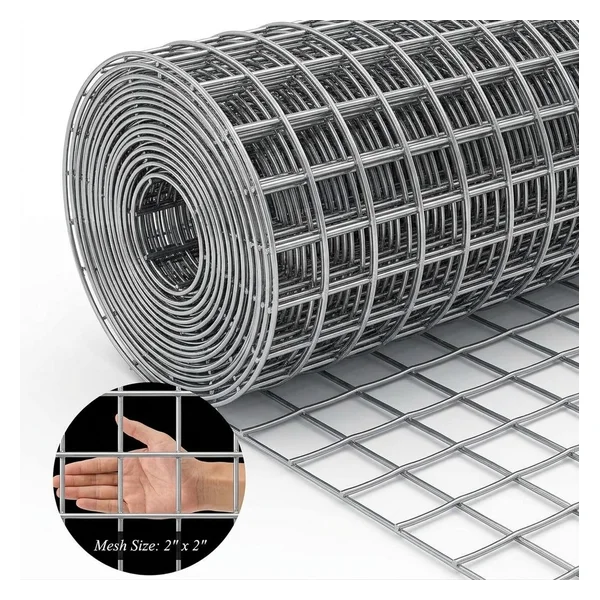
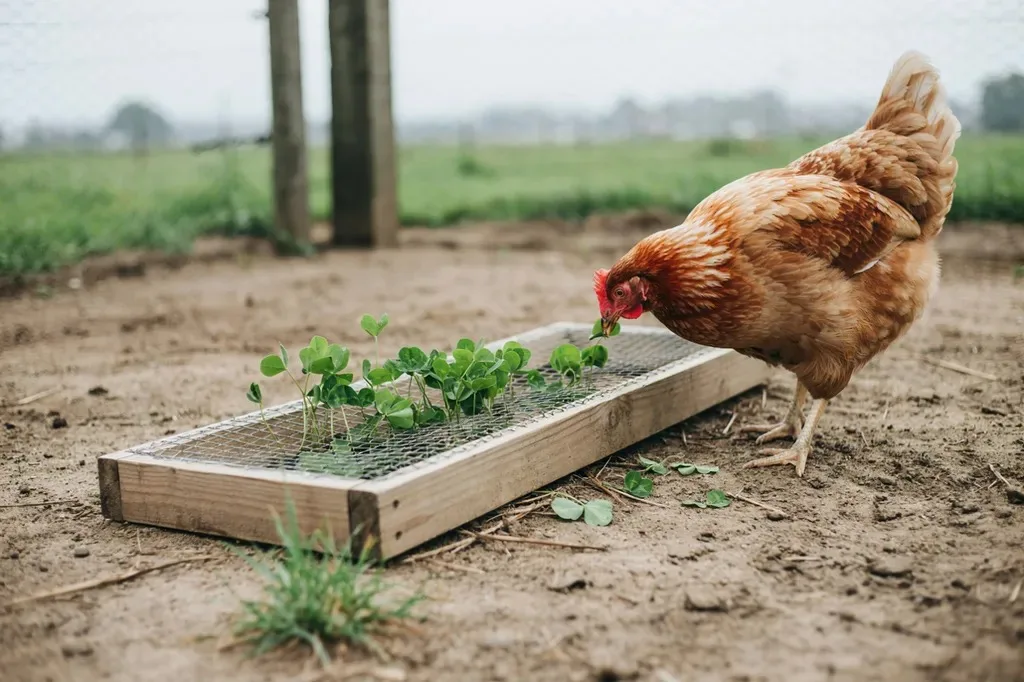
Chickens love plants to death. A grazing frame stops that. Build a simple wooden frame about four to six inches tall, cover the top with sturdy wire mesh, and plant clover or greens underneath. The plants grow up through the mesh, the hens nibble the tops, and the roots stay safe so the patch keeps regrowing.
For trees and shrubs, protect the young plants with a wire cage for the first year or two until they’re big enough to handle scratching.
A Simple First-Year Plan
You don’t have to plant everything at once. Here’s an easy way to start:
- This fall: plant one mulberry tree or Siberian pea shrub near the run, and protect it with a wire cage.
- Early spring: sow clover along the outside of the fence and under one grazing frame.
- Late spring: plant a short row of sunflowers and amaranth in a spare corner.
- All season: pull dandelions and chickweed from the garden and toss them in the run.
- Next fall: hang the dried seed heads for the hens, and save a few to replant.
By the second year, something on that list is feeding your flock from spring through fall, and you’ll barely have lifted a shovel.
Plants to Keep Away From Your Chickens
Chickens usually avoid plants that are bad for them, but bored hens in a small run will taste almost anything. Keep these out of the run and away from the fence line:
- Yew: very toxic to animals, including the leaves, bark and seeds. Never plant it near a run.
- Oleander: toxic in every part, even dried leaves.
- Foxglove and lily of the valley: both contain compounds that affect the heart.
- Azaleas and rhododendrons: the leaves are toxic to birds.
- Daffodil and tulip bulbs: hens that dig up bulbs can get sick.
- Rhubarb leaves: high in oxalic acid.
- Tomato, potato and eggplant leaves: they contain solanine.
- Avocado trees: the leaves, skin and pit contain persin.
If any of these already grow in your yard, fence them off or plant the run somewhere else.
Frequently Asked Questions
Can any plant really replace chicken feed?
No single plant can. Laying hens need balanced protein and a lot of calcium. Plants make the bag last longer, but a good layer feed should stay the base of the diet.
Which plants are dangerous to chickens?
Keep hens away from rhubarb leaves, the leaves and stems of tomatoes and potatoes, avocado plants, and ornamental plants like foxglove and oleander.
Will chickens destroy my vegetable garden?
They will if they get in. Keep the vegetable garden fenced off, and let the hens in only after harvest, when they’ll clean up bugs and leftover plants.
How long before the plants start feeding my hens?
Clover, greens and annuals feed them in the first season. Shrubs and trees like mulberry and Siberian pea shrub usually take a couple of years to produce well.
When should I plant?
Fall is a good time to plant trees and shrubs like mulberry and Siberian pea shrub in most areas, because the roots settle in over winter. Sow clover and annuals in spring.