
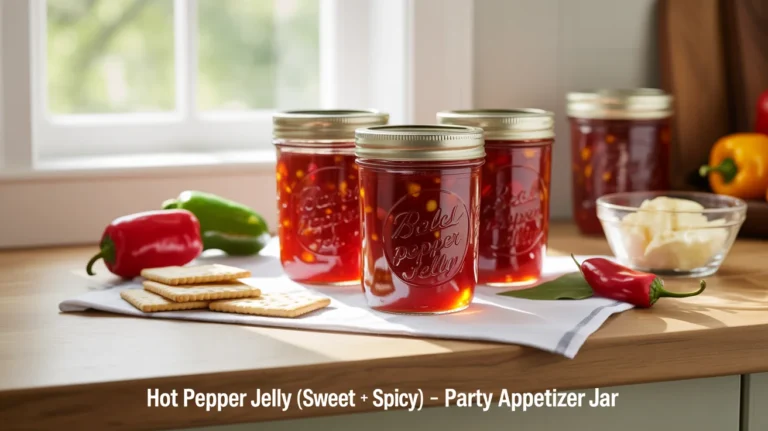
A gleaming jar of hot pepper jelly (sweet + spicy) – party appetizer jar on standby turns any impromptu get-together into a crowd-pleasing event. This ruby-red condiment is bright, tangy, and layered with warmth from fresh peppers. Spread it over cream cheese with crackers, glaze sizzling wings, or spoon it onto a charcuterie board for instant color and pop. In this complete guide, you’ll learn how to choose peppers, make a reliable small-batch recipe, safely water-bath can it for the pantry, get a perfect set every time, and serve it like a pro at your next party.
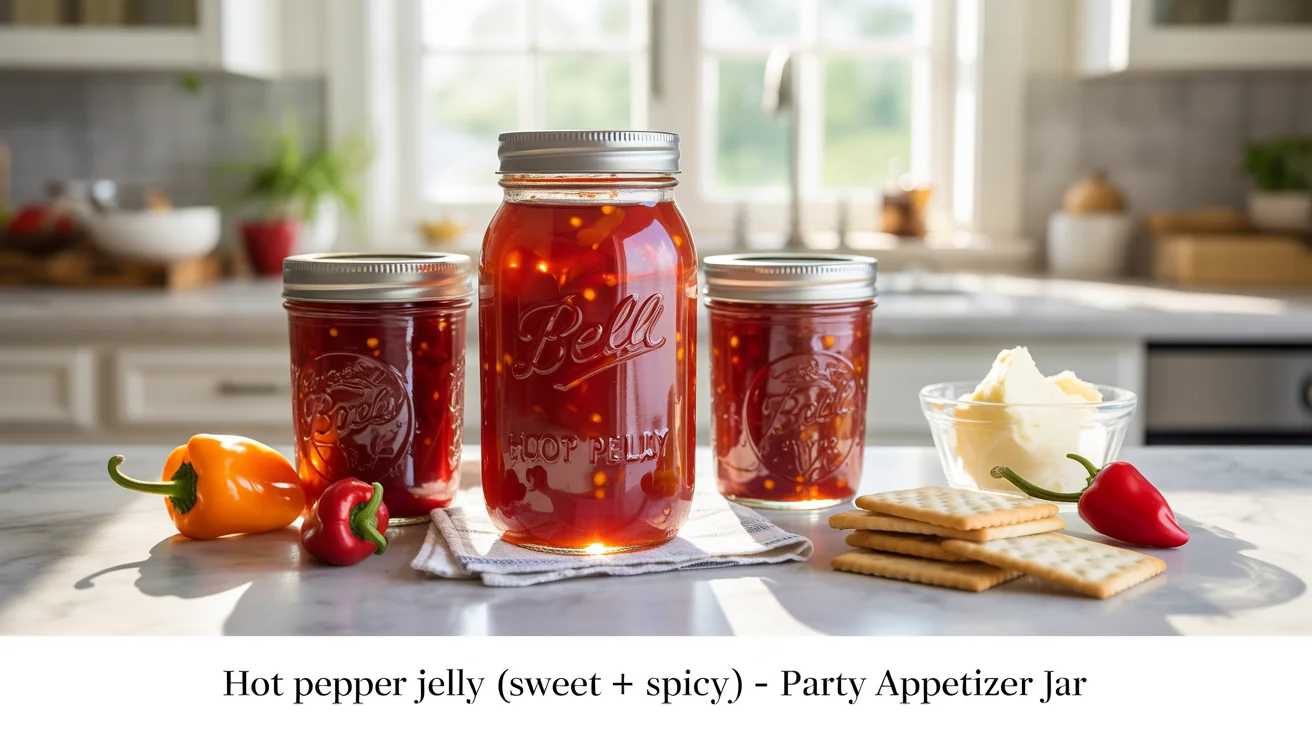
If you love the idea of stocking your pantry with homegrown peppers for jelly, jam, and more, explore the sustainable skills inside The Self-Sufficient Backyard. It’s a handy resource for planning a garden and preserving your harvest.
Why hot pepper jelly belongs in every party appetizer jar
Hot pepper jelly earns its keep for two reasons: it tastes incredible and it’s wildly versatile. The balance of sugar and vinegar creates a sweet-tart base, while peppers bring nuance—from grassy jalapeño heat to fruity habanero fire. That combination is tailor-made for party boards, appetizer jars, and last-minute entertaining.
- Flavor profile: Vibrant acidity from apple cider or white vinegar, a soft-set gel from pectin, and a customizable heat level from mild to bold.
- Texture: Spoonable and glossy; it should cling to cream cheese or cheddar without being rubbery or runny.
- Pairings: Aged cheddar, creamy goat cheese, Brie, whipped feta, smoked turkey, country ham, crispy chicken, grilled salmon, roasted veggies, biscuits, cornbread, and flaky puff pastry bites.
The appetizer jar bonus: Assembling a “party jar” (a mason jar layered with cream cheese or whipped cheese and topped with pepper jelly) makes a fast, show-stopping centerpiece. Serve with sturdy crackers, crostini, or seed-studded flatbreads to handle the sticky-sweet glaze. Keep an extra jar in the fridge for emergency hosting or potlucks; it’s five minutes from fridge to table.
Entertaining shortcuts
- Pre-portion into mini jars for personal boards.
- Warm slightly for a pourable glaze over baked brie or hot wings.
- Mix 2–3 tablespoons into mayo for an instant sandwich spread.
For more appetizer board inspiration, see How to build a balanced charcuterie board.
Choosing peppers and ingredients for the perfect sweet-spicy balance
Your pepper mix defines the jelly’s personality. Think of color, flavor, and heat as dials you can adjust.
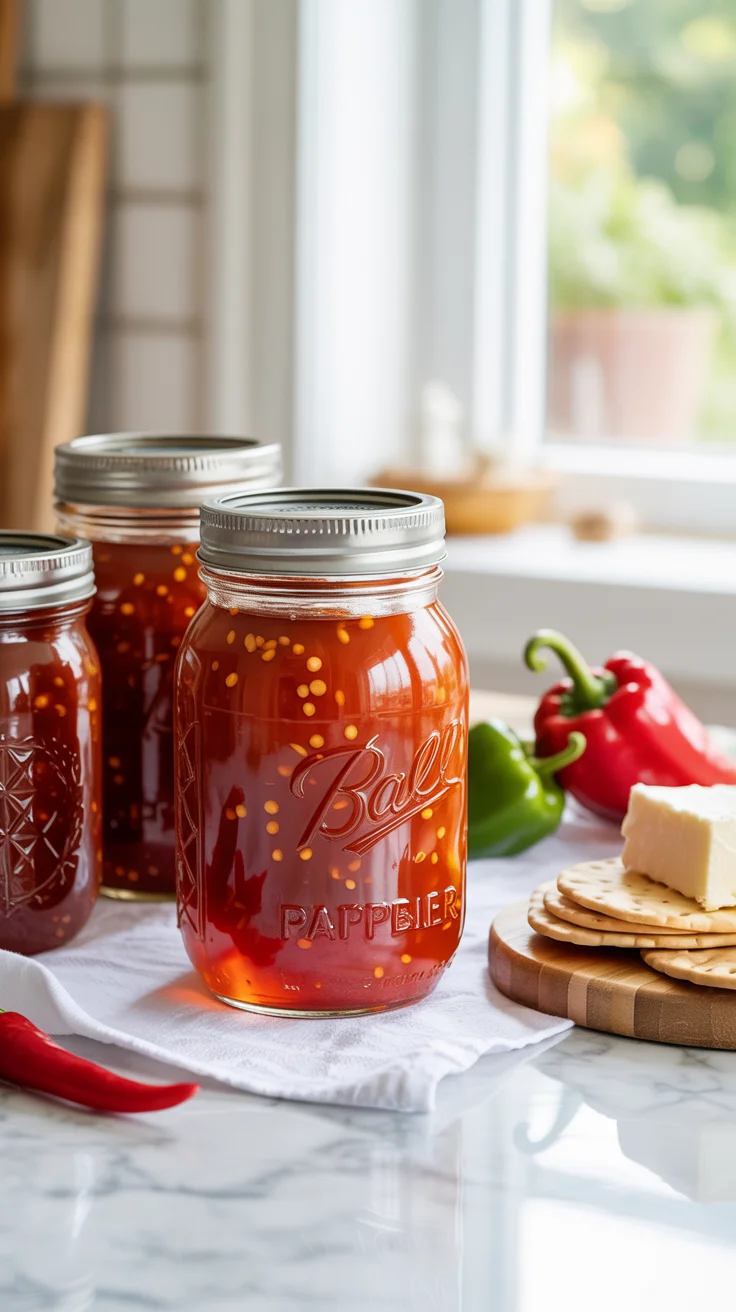
- Mild sweet peppers: Red bell, mini sweet peppers, and long sweet Italian peppers add body, natural sweetness, and vivid color without much heat.
- Medium heat: Jalapeño (bright, vegetal), Fresno (fruity, slightly hotter than jalapeño), Serrano (clean, sharper heat).
- Hot: Habanero (floral, tropical), Scotch bonnet (fruity, intense), Thai bird’s eye (straight heat).
- Color: Red peppers yield classic ruby jelly; green peppers create a jewel-toned emerald; orange/yellow give a golden hue. Mixing red bell with green jalapeños gives a bright red with specks.
Heat control tips
- Remove membranes and seeds for less heat; keep some for a bolder bite.
- Mix hot and sweet peppers for complexity—e.g., 1.5 cups red bell + 0.5 cup jalapeño.
- Wear gloves when handling hot peppers and avoid touching your face.
Vinegar and sugar choices
- Vinegar: 5% acidity white distilled vinegar keeps color brilliant and flavor clean; apple cider vinegar adds a softer, fruit-forward tang. Do not reduce the vinegar in canning recipes—acidity is key to safety.
- Sugar: White granulated sugar is standard; it supports the gel and preserves color. For low-sugar versions, use a pectin formulated for reduced sugar and follow its directions precisely.
Pectin 101
- High-methoxyl (HM) pectin: Requires a full boil with a high sugar ratio to set.
- Low-methoxyl (LM) pectin (often calcium-activated, such as Pomona’s): Sets with lower sugar; good for reduced-sugar recipes.
- Liquid vs. powdered: They are not interchangeable measure-for-measure—follow your pectin brand’s instructions.
Gardeners’ tip: Consistent watering helps peppers grow thicker walls and better flavor. If you’re building a resilient garden watering system, take a look at The AquaTower for ideas that keep plants hydrated and productive.
Hot pepper jelly recipe you can trust for small-batch or canning
This reliable, classic-style recipe uses standard liquid pectin and yields a glossy, spoonable set. Follow measurements carefully, and do not reduce the vinegar or sugar if you plan to water-bath can.
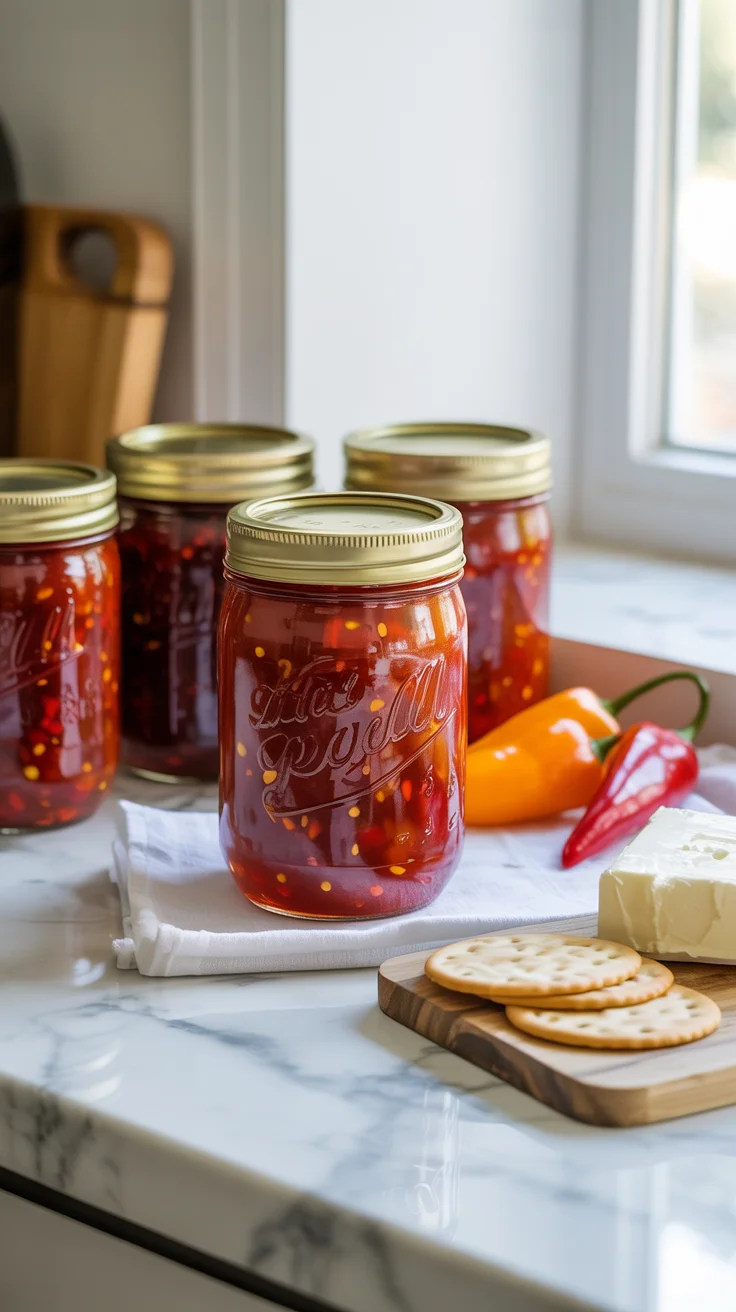
Yield: About 5 half-pint (8 oz) jars
Ingredients
- 1.5 cups finely chopped red bell pepper (seeded)
- 0.5 cup finely chopped jalapeño or Fresno peppers (seeded for mild; keep some seeds for heat)
- 1 cup 5% acidity vinegar (white or apple cider)
- 4 cups granulated sugar
- 1 pouch (3 oz) liquid pectin
- Optional: 1 teaspoon butter to reduce foaming
Prep notes
- Finely chop peppers (a food processor with quick pulses works; avoid a puree).
- Keep ratios the same if swapping pepper varieties.
Stovetop method
- Combine peppers, vinegar, and sugar in a large nonreactive pot. Add butter if using.
- Bring to a full rolling boil over high heat, stirring constantly.
- At a full boil that cannot be stirred down, stir in liquid pectin. Return to a hard boil for 1 minute, stirring.
- Remove from heat. Skim foam.
- For refrigerator jelly: Ladle into hot, clean jars, leaving 1/4-inch headspace. Cool, cap, and refrigerate up to several weeks (see storage section below).
For low-sugar variation
- Use a low-sugar pectin (LM pectin), and follow the brand’s instructions exactly. The acid-sugar-pectin balance changes with reduced sugar. Expect a softer, more spoonable set.
Color and clarity tips
- Use white vinegar for vivid red; cider vinegar yields a warmer hue.
- To avoid cloudiness, don’t pulverize peppers into a slurry; fine mince is best.
- Add a few drops of natural red pepper juice for deeper red if needed (avoid artificial color in canning).
If you plan to can, continue with the water-bath steps below. For a refresher on jar prep, see How to sterilize jars safely.
Hot Pepper Jelly water-bath canning, safely step by step
Hot pepper jelly is a great candidate for water-bath canning because it’s high in sugar and acidified with 5% vinegar. Safety depends on keeping that acidity and processing time intact.
Equipment
- Water-bath canner or deep stockpot with a rack
- 5 clean half-pint mason jars with new lids and bands
- Jar lifter, ladle, funnel, and a bubble remover tool
Jar prep
- Wash jars, lids, and bands in hot soapy water; rinse.
- Keep jars hot until filling (run in the dishwasher “hot dry,” or keep in 180°F water).
- Simmer lids gently; do not boil according to most modern lid manufacturers.
Filling and headspace
- Reheat jelly to a boil after the 1-minute pectin boil.
- Ladle hot jelly into hot jars, leaving 1/4-inch headspace.
- Run a bubble remover around the inside. Adjust headspace if needed.
- Wipe rims with a clean damp cloth; apply lids and screw bands fingertip tight.
Processing
- Place jars on rack in the boiling water canner; water should cover jars by at least 1–2 inches.
- Return to a vigorous boil, then start timing.
Process times for half-pints and pints
- 0–1,000 ft: 10 minutes
- 1,001–6,000 ft: 15 minutes
- Above 6,000 ft: 20 minutes
After processing, turn off heat, remove the lid, and let jars rest in the water for 5 minutes. Lift jars straight up and place on a towel-lined counter. Do not tilt. Let cool undisturbed for 12–24 hours.
Check seals
- Lids should be concave and not flex when pressed.
- Remove bands, wipe jars, label, and store in a cool, dark place.
- Any unsealed jar goes to the fridge.
For more preservation ideas and historical pantry know-how, browse the techniques inside The Lost Superfoods. It’s full of long-shelf-life concepts you can adapt for a resilient kitchen.
If you’re new to canning, review Water-bath canning basics before your first batch.
Getting pepper jelly to set perfectly every time
A successful set is a dance between pectin, sugar, acid, and heat. Understanding that chemistry gives you control.
Why jelly sets
- Pectin forms a network when heated with sufficient sugar and the right acidity, then it locks in place as the mixture cools.
- HM pectin needs higher sugar and a vigorous boil; LM pectin sets in the presence of calcium and can tolerate less sugar.
Boil and timing
- Bring the mixture to a hard, rolling boil before adding liquid pectin.
- After adding pectin, return to a full rolling boil and boil exactly 1 minute, stirring constantly.
- Underboiling can lead to a runny set; overcooking can create a stiff or rubbery texture.
Acid and sugar balance
- Do not reduce sugar in HM pectin recipes. If you want less sugar, use LM pectin and follow the brand’s directions.
- Use 5% vinegar; lemon juice can help brighten flavor but don’t substitute it for vinegar unless using a tested recipe.
Tests for doneness
- Spoon or sheet test: Lift a spoon and let the jelly drip; it should “sheet” or fall in a wider curtain rather than droplets.
- Cold plate test: Place a drizzle of jelly on a chilled plate and rest 1 minute; push with your finger—it should wrinkle slightly.
- Temperature guide: Jam stage is about 220°F at sea level; this can vary with sugar and pectin type.
Troubleshooting
- Too soft after 24 hours: Re-cook. For every 4 cups of jelly, combine 1/4 cup sugar, 1 tablespoon lemon juice, and 1 tablespoon powdered pectin or half a pouch of liquid pectin. Bring to a hard boil 1 minute, jar, and process.
- Too firm: Warm gently and whisk in a few tablespoons of hot water or vinegar for serving; note adjustments for next batch.
- Weeping or separation: Ensure a full boil and prompt jarring; stir before ladling to distribute solids.
For deeper background on safe acidity and measurements, see the Beginner’s guide to food-safe pH.
Hot Pepper Jelly appetizer jar ideas for parties and boards
Use your jelly as an instant centerpiece. These ideas mix textures and temperatures to spotlight that sweet-heat glow.
Classic party jar
- Spread a thick layer of cream cheese (or whipped goat cheese) in a half-pint jar.
- Spoon pepper jelly over the top.
- Sprinkle with chopped toasted pecans or pistachios and a pinch of flaky salt.
- Serve with sturdy crackers, crostini, or seeded crisps.
Baked brie bite
- Puff pastry square + brie cube + teaspoon of jelly; bake at 400°F until puffed and golden.
- Finish with thyme leaves and black pepper.
Savory-sweet wings
- Toss baked or air-fried wings with a warmed mix of 1/2 cup jelly, 1 tablespoon soy sauce, and 1 tablespoon lime juice.
- Broil briefly to lacquer.
Grilled favorites
- Brush jelly thinned with a splash of vinegar over grilled salmon, pork chops, or chicken in the last 2–3 minutes of cooking to glaze.
- Add a dab of butter to the glaze for sheen.
Cheese and charcuterie pairings
- Aged cheddar or Gouda for contrast, Brie for creaminess, chèvre for tang, and blue cheese for a bold play.
- Prosciutto, soppressata, or smoked turkey alongside tart apple slices and salted nuts.
Quick sauces and spreads
- 2 tbsp jelly + 1 tbsp Dijon + 1 tbsp apple cider vinegar = instant vinaigrette.
- 2 tbsp jelly + 2 tbsp mayo + 1 tsp lemon juice = sandwich spread.
For board-level plating tricks and pairing ratios, visit How to compose a seasonal appetizer platter.
Storage, shelf life, and food safety essentials
Canned storage
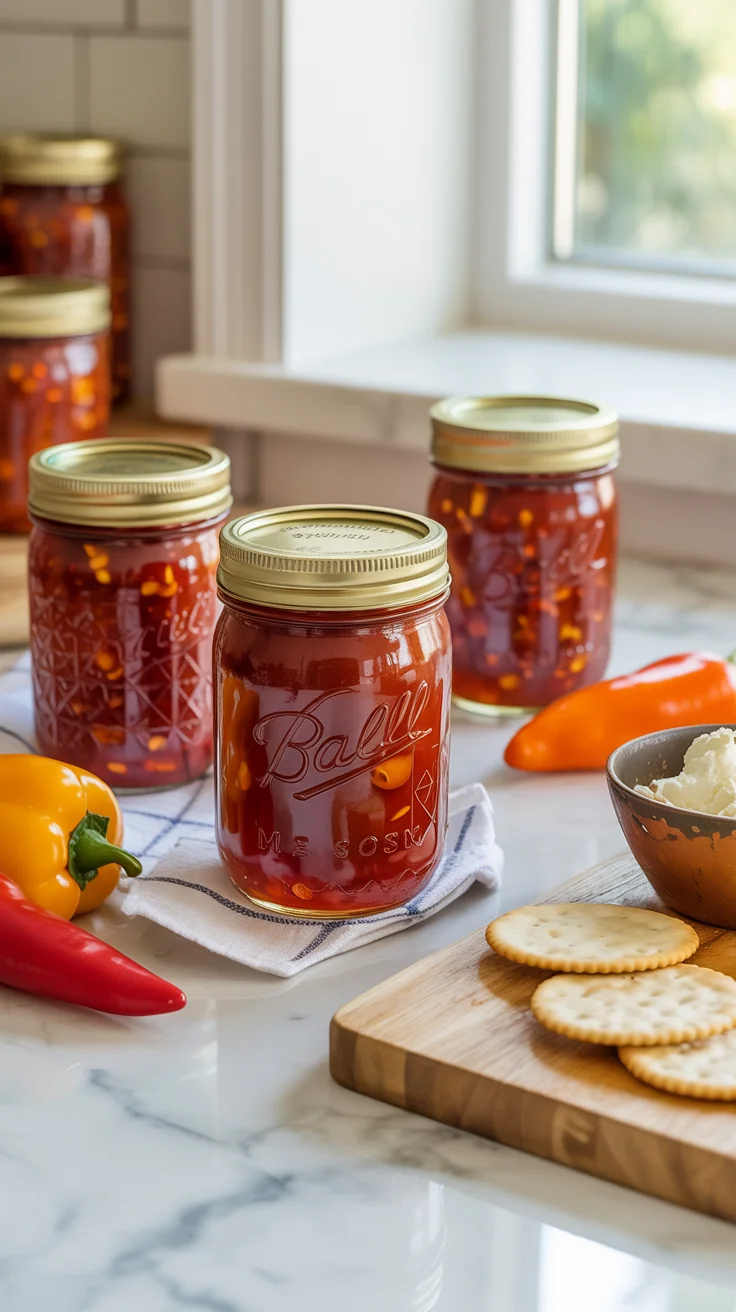
- Properly water-bath canned: Store sealed jars in a cool, dark place. Best quality within 12 months; safe longer if sealed, but flavor/color gradually fade.
- Label jars with date and heat level (“mild,” “medium,” “hot”).
Refrigerated storage
- Opened jars: Refrigerate and use best within 1 month; with careful, clean handling they can last 2–3 months. Always use clean utensils and recap promptly.
- Signs of spoilage: Off odors, mold growth, fizzing, bulging lids, or unusual separation. Discard if in doubt.
Freezer option
- Pepper jelly freezes well for up to 6 months. Leave 1/2-inch headspace in freezer-safe containers. Thaw in the fridge; whisk to recombine.
Gifting and labeling
- Include a flavor/heat label and a “Refrigerate after opening” note.
- For spicy gifts, offer a mild and a hot jar; the color duo looks great in a basket.
Batch planning and pantry rotation
- Make a mild batch for broad appeal and a specialty batch with habanero and pineapple for adventurous eaters.
- Rotate stock: Oldest jars up front; enjoy within a year for peak flavor.
Power and process readiness
- Canning days go smoother with reliable power, especially if you’re processing multiple batches or running a glass-top range. For off-grid or backup readiness, the Ultimate OFF-GRID Generator offers a resilience boost when you don’t want to pause mid-boil.
Helpful homestead resources
- Grow, preserve, and plan with The Self-Sufficient Backyard.
- Keep gardens watered effectively via The AquaTower.
- Explore time-tested preservation concepts in The Lost Superfoods.
Flavor variations and creative twists that still can safely be canned
You can change peppers and spices freely as long as you don’t reduce the overall vinegar or sugar in a tested formula. Swaps should hold to the same total pepper volume and 5% vinegar ratio.
Color-forward combos
- Red: Red bell + Fresno + a touch of habanero for depth.
- Green: Green bell + jalapeño + serrano for a fresh, grassy heat.
- Sunset: Orange bell + Scotch bonnet for tropical flair.
Fruit pairings
- Peach or mango: Add 1/2–1 cup finely chopped ripe fruit, reduce bell peppers by the same amount. Keep vinegar and sugar unchanged.
- Pineapple: Adds bright acidity and sweetness; chop fine to avoid chunks.
Herbs and spices
- Ginger: 1–2 teaspoons fresh grated ginger intensifies brightness.
- Garlic: Go light—1 small clove minced per batch; bold garlic can dominate.
- Warm spice: A pinch of allspice or coriander seed complements fruity peppers.
Citrus accents
- Add fine zest (lemon, lime, or orange) for perfumed lift; keep amounts modest so the set remains clear and the flavor balanced.
Heat boosters
- Red pepper flakes: Add a teaspoon for visible flecks and a consistent glow of heat.
- Infused vinegar: Steep pepper trimmings in vinegar and strain before use—be sure the final vinegar remains 5% acidity.
Textural tweaks
- For a clearer gel, strain out solids after the initial boil and before adding pectin; the result is a smooth pepper glaze.
- For more texture, mince peppers extra fine and stir once right before ladling so bits are evenly distributed.
Remember: For canning safety, don’t reduce vinegar or sugar in HM pectin recipes. If you desire less sugar, switch to an LM pectin and follow its dedicated ratio and instructions.
Troubleshooting and pro tips from jar to party table
Clarity and color
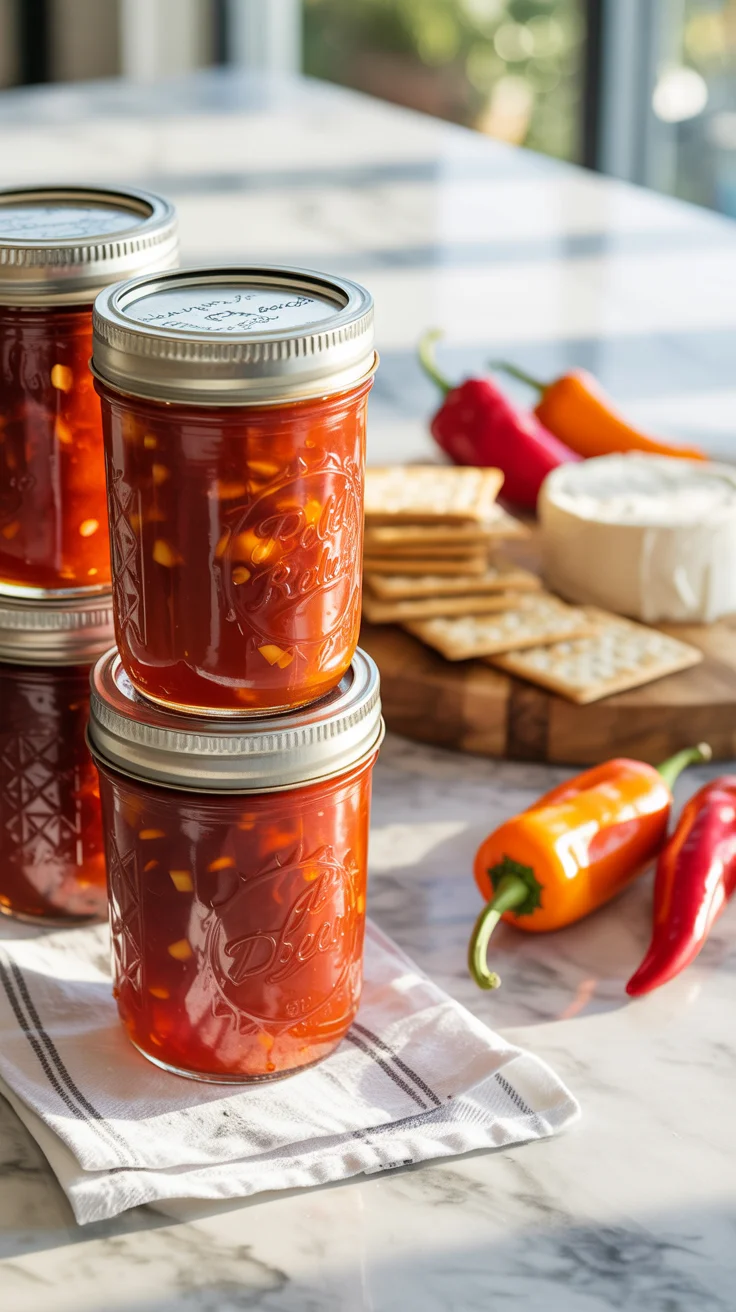
- Avoid overprocessing peppers in a blender; aim for a tiny dice with a knife or quick pulses in a processor.
- White vinegar keeps reds brighter; cider vinegar softens tone.
Preventing float
- Let the jelly cool 3–5 minutes off heat, stirring occasionally before ladling. This helps suspend pepper pieces evenly.
No foam finish
- Stir in 1 teaspoon butter during the initial boil to reduce foam, or skim thoroughly at the end for a glass-like top.
Jar cracks or siphoning
- Keep jars hot and avoid sudden temperature swings.
- Let jars rest 5 minutes in the canner with heat off and lid removed before lifting out to minimize siphoning.
Serving temperature
- Slightly warmed jelly spreads and glazes easily; chilled jelly holds shape on cheese. Match temperature to the task.
Scaling and timing
- Double batches can over-gel or cook unevenly. Make two back-to-back single batches for consistent results.
Entertaining prep
- Assemble your party appetizer jar up to a day ahead: base of cream cheese in a jar, jelly on top, lid on, then garnish just before serving.
Conclusion
Hot pepper jelly (sweet + spicy) – party appetizer jar is the ultimate entertainer’s ally: a glowing, versatile condiment that leaps from pantry to platter. With the right pepper blend, a tested pectin ratio, and safe water-bath canning steps, you’ll stock jars that set beautifully and taste bright for months. Keep a jar on hand for instant appetizers, crowd-pleasing glazes, and giftable goodies—and enjoy the sweet heat you’ve crafted.
FAQ
Can hot pepper jelly be water-bath canned?
Yes. Pepper jelly is suitable for water-bath canning because it’s high in sugar and acidified with 5% vinegar. Follow a tested recipe, keep the vinegar and sugar amounts intact, fill hot jars with 1/4-inch headspace, and process half-pints for 10 minutes at 0–1,000 ft (adjust for altitude). Check seals after 12–24 hours and store sealed jars in a cool, dark place.
How do you get pepper jelly to set properly?
Use the right pectin for your sugar level, maintain a full rolling boil, and respect the 1-minute boil after adding liquid pectin. Don’t reduce sugar in HM pectin recipes; if you want less sugar, switch to LM pectin and follow those directions. Test set with a cold plate or by looking for a “sheet” off the spoon. If it’s still soft after 24 hours, re-cook with a bit more pectin and sugar.
What peppers are best for sweet-spicy jelly?
A mix of sweet red bell for body and color plus a medium-hot pepper like jalapeño or Fresno is classic. For more kick, add serrano or a small amount of habanero or Scotch bonnet. Aim for 2 cups total chopped peppers (e.g., 1.5 cups bell + 0.5 cup hot pepper) for a balanced, flavorful jelly.
How long does pepper jelly last once opened?
Opened jars keep in the refrigerator best for about 1 month, and up to 2–3 months with careful handling (clean spoon, quick recap, cold storage). Discard if you notice mold, off smells, bubbles, or texture changes. Properly processed and sealed jars stored in a cool, dark place hold best quality for about 12 months before opening.