
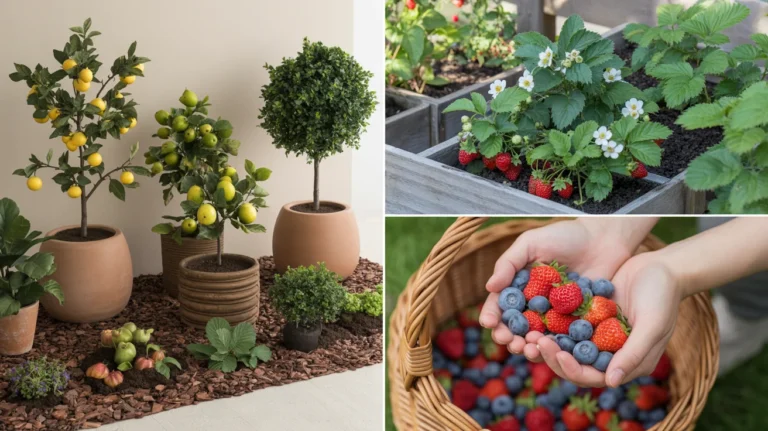
A thriving mini orchard isn’t just for people with acreage. With dwarf fruit trees and compact berry bushes, you can stack harvests in even the smallest backyard, side yard, or patio. This guide shows you exactly how to plan, plant, and care for a backyard “mini orchard” of dwarf fruit trees + berries—whether you’re growing in the ground, raised beds, or containers.
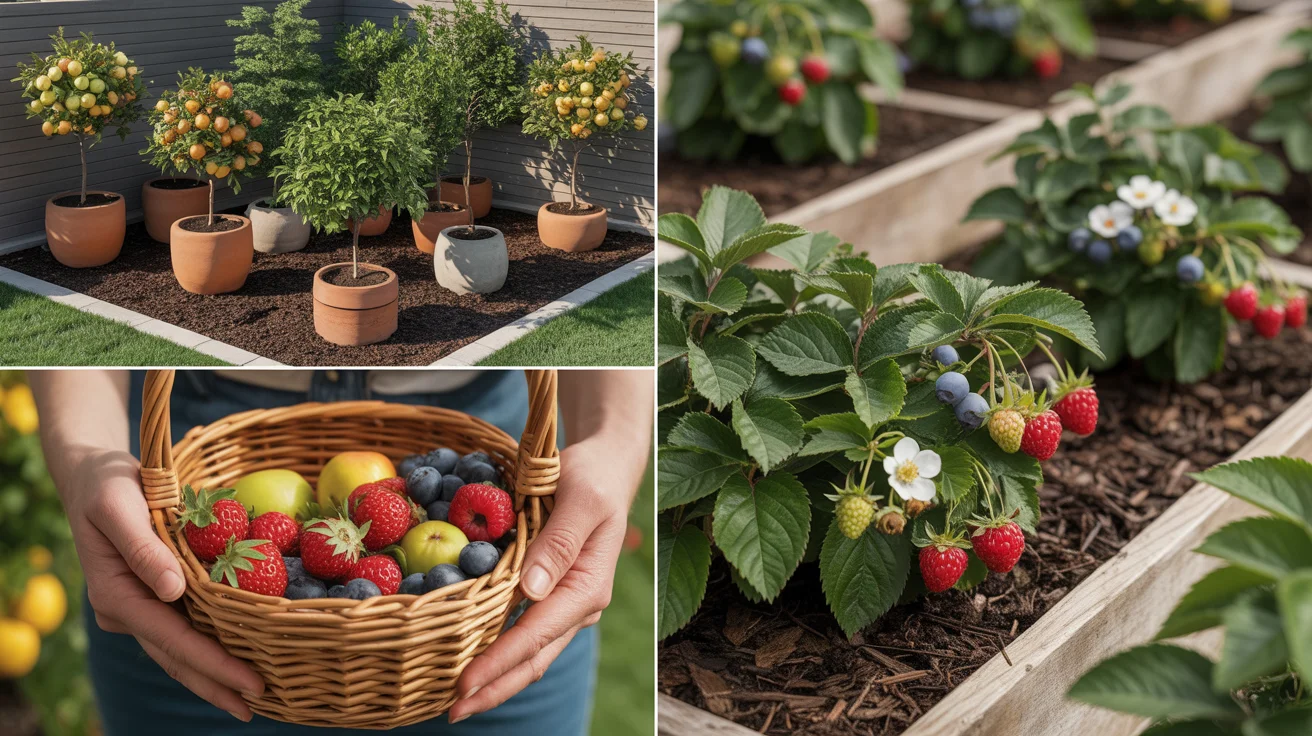
If you want a complete blueprint for turning a small space into a productive homestead, check out The Self-Sufficient Backyard. It’s a practical companion to everything in this guide.
Laying the groundwork for a productive mini orchard
Every successful mini orchard starts with a plan. A few smart decisions at the beginning pay you back with easier care, faster harvests, and higher yields year after year.
- Sunlight: Aim for 6–8 hours of direct sun daily. Morning sun is best because it dries dew quickly, reducing disease pressure. If your yard has dappled shade, position berries (especially currants and raspberries) at the edges and reserve the sunniest spots for dwarf fruit trees.
- Wind and microclimates: Walls and fences capture heat; low spots collect frost. Put frost-tender types (citrus, figs) near warm south- or west-facing walls. Use windbreaks or trellises to protect blossoms in spring.
- Mapping space: Sketch your area. Place trees along boundaries or as living screens. Slip berries between trees, around patios, or along paths. Espaliered trees on a fence conserve space and look stunning.
- Pollination: Some dwarf fruit trees are self-fertile (e.g., many peaches, figs), while others need a partner with overlapping bloom (many apples and pears). If space is tight, choose self-fertile varieties or multi-grafted “fruit salad” trees.
- Chill hours: Temperate fruit trees require a certain number of cool hours in winter to set fruit. Pick varieties adapted to your region’s chill hours; ask local nurseries or extension services for guidance.
- Soil and drainage: Slightly acidic to neutral soil (pH 6.0–7.0) suits most fruit. Blueberries are the exception; they prefer very acidic soil (pH 4.5–5.5). If drainage is poor, use raised beds or large containers with high-quality mix.
- Staggered harvests: Choose early-, mid-, and late-season cultivars so you don’t get all your fruit at once. Combine everbearing strawberries with summer-bearing raspberries and late-ripening apples to spread the bounty.
Helpful internal resources:
- How to prune fruit trees the easy way
- Guide to building raised beds that last
- Rainwater harvesting for small gardens
Best dwarf fruit trees for a backyard mini orchard
Dwarfing rootstocks and compact varieties give you full-sized flavor on a smaller framework. Most dwarf trees top out at 8–12 feet with pruning, and many can be kept even smaller.
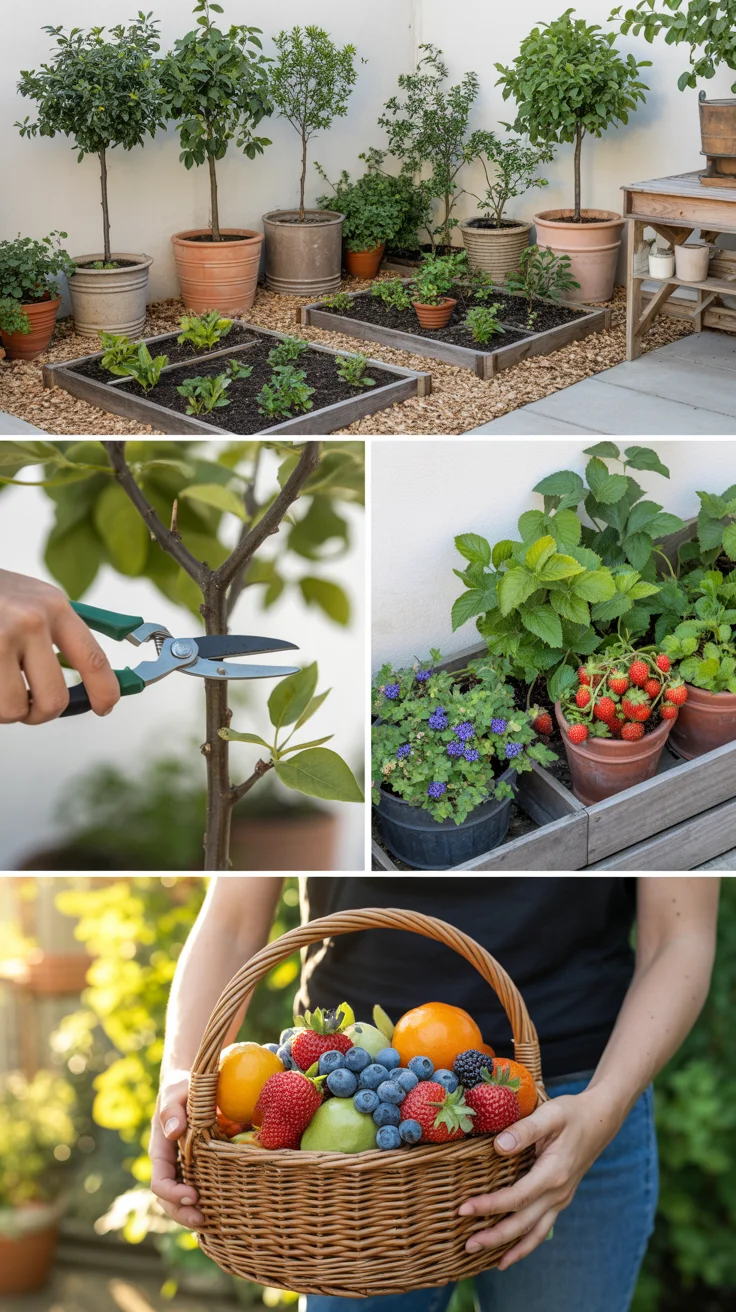
- Apple: A classic for beginners. Look for disease-resistant cultivars suitable to your climate and a true dwarf rootstock. Many apples benefit from a pollination partner; choose two with overlapping bloom. Train as espalier, cordon, or compact central leader.
- Pear: European pears thrive in many regions and are generally low-maintenance. Asian pears are crisp, juicy, and often more precocious (fruiting earlier). Most pears need cross-pollination.
- Peach and nectarine: Fast to bear—often in 2–3 years. They’re self-fertile, so one tree can produce. Prune to an open-center form to maximize sunlight and airflow; this keeps trees small and productive.
- Cherry: Choose self-fertile sweet types if you have space for one, or go with sour cherries for reliable cropping and easier pollination. Dwarf cherries are stunning as fans against fences.
- Plum and apricot: Plums are vigorous and productive; European types are often easier to manage. Apricots are delicious but can be frost-sensitive—site them against warm walls if late frosts are common.
- Fig: Ideal for warm climates, but surprisingly container-friendly in cooler zones if overwintered in a garage or protected nook. Self-fertile and fast-growing.
- Citrus (where climate allows): Dwarf Meyer lemon, calamondin, and kumquat are excellent in containers. Move them under cover during cold snaps.
- Pomegranate and persimmon: Naturally compact and ornamental, with outstanding fall interest. Both take readily to container culture.
Choosing rootstocks and forms:
- True dwarf rootstocks keep trees compact with minimal pruning; semi-dwarf fits slightly larger spaces.
- Training systems (espalier, fan, cordon) flatten the tree for small spaces and quick harvests.
- Multi-graft trees offer variety and cross-pollination on a single trunk—great for tiny yards.
Climate-smart choices:
- Hot, dry climates: Figs, pomegranates, olives (where legal), apricots, and heat-tolerant peach varieties.
- Cool climates: Apples, pears, sour cherries, currants, gooseberries.
- Humid regions: Choose disease-resistant apples and peaches; improve airflow with open-center forms and trellises.
Tip: Plant “precocious” types (those that fruit young) to start harvesting sooner while slower trees mature.
Berry companions that thrive in small yards
Berries fill the spaces between trees, edging beds, or climbing trellises. They’re quick to produce, delicious fresh, and easy to preserve. Mix several types to extend your season.
- Blueberries: The patio superstar. Use large containers (15–20+ gallons), acidic potting mix, and regular moisture. Pair early-, mid-, and late-season cultivars for months of harvest. Plant two or more compatible types for better yields.
- Raspberries: Primocane (fall-bearing) varieties fruit on first-year canes—cut them to the ground each winter for a clean reset. Floricane (summer-bearing) types fruit on second-year canes and need selective pruning. Thornless options make maintenance pleasant. Trellis in narrow strips along fences.
- Blackberries: Thornless, erect or semi-erect types are well-behaved and hugely productive. They appreciate sturdy trellising and mulch to keep roots cool.
- Strawberries: Everbearing or day-neutral varieties provide fruit through the season. Tuck into planters, hanging baskets, or along bed edges. Refresh plantings every 2–3 years for vigor.
- Currants and gooseberries: Compact shrubs that tolerate part shade and cooler climates. High in flavor, great for jams, syrups, and fresh nibbling. Excellent under-plantings beneath taller trees.
- Elderberry: A larger shrub for fence lines. Flowers and berries are both useful, though you’ll need multiple plants for best fruit set.
Design ideas:
- Edible hedges: Alternate blueberries and currants along a path.
- Vertical lanes: Trellis raspberries and blackberries like living fences.
- Strawberry skirts: Ring the base of dwarf fruit trees with strawberries for a living mulch that feeds you.
- Container bar: Group three large containers—one blueberry, one dwarf citrus or fig, one strawberry tower—for a constant harvest on a patio.
Pro tip: Berries are shallow-rooted—keep them mulched and watered consistently for plump, sweet fruit.
Containers and raised setups for dwarf fruit trees + berries
If you think you don’t have space, containers and raised beds change the game. They also let you tailor soil conditions and move plants to chase sun or avoid frost.
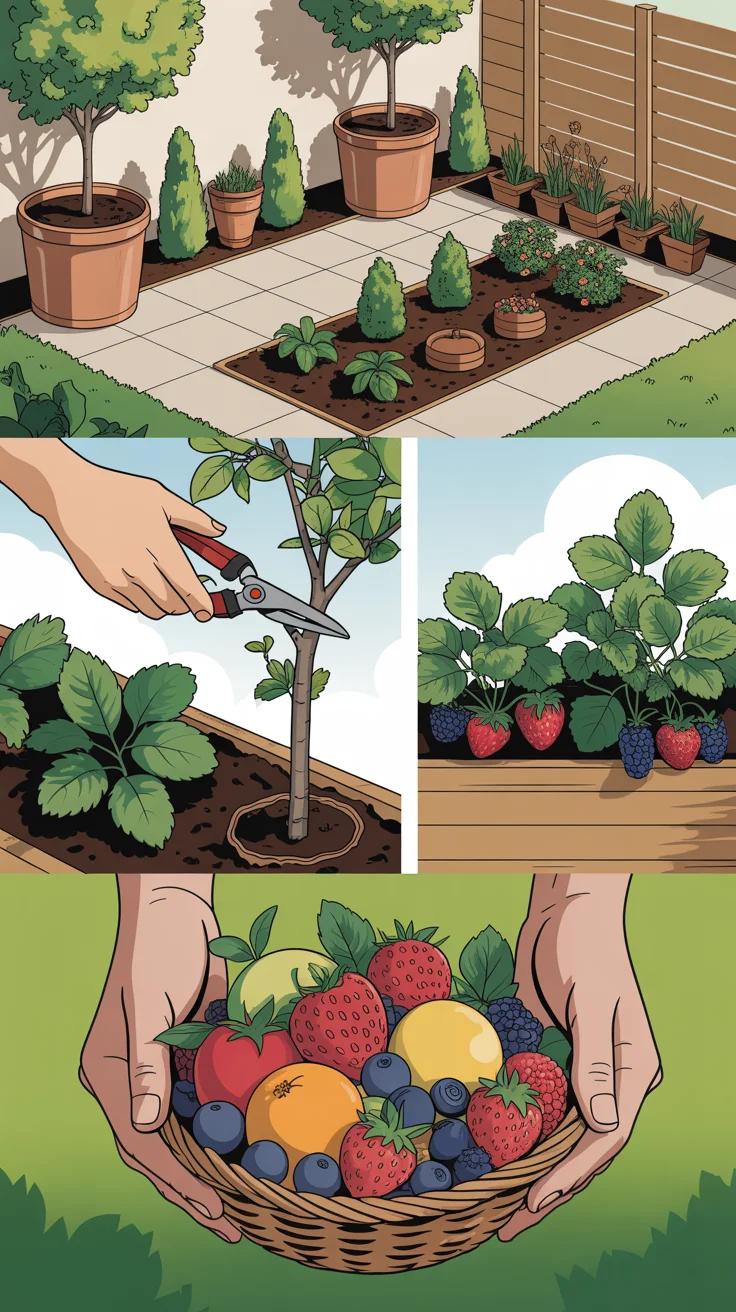
Container sizes and materials:
- Dwarf fruit trees: Start with 15–25 gallons; upsize to 25–30+ gallons as trees mature. Use sturdy plastic, resin, or fabric pots with ample drainage holes.
- Blueberries: 15–20+ gallons with acidic, peat-free ericaceous mix; supplement with elemental sulfur as needed.
- Strawberries: Planter boxes, grow bags, and towers all work.
- Raspberries/blackberries: 15–20+ gallons with trellis support.
Soil and drainage:
- Use a high-quality, soilless mix: composted bark, coconut coir, perlite/pumice. Avoid heavy garden soil in containers—it compacts and starves roots of air.
- Add slow-release organic fertilizer at planting and feed lightly during the growing season.
- Elevate containers on feet to prevent waterlogging. Water until it runs out the bottom, then allow the top inch to dry.
Watering and irrigation:
- Container plants dry out faster. In hot weather, daily watering may be needed.
- Consider drip lines on a simple timer for consistency.
- Mulch containers with shredded bark, straw, or cocoa hulls to reduce evaporation.
Space-saving structures:
- Espalier fruit trees against fences to keep them flat and manageable.
- Use step-over apples (trained at knee height) to edge beds.
- Build simple T-post trellises for cane berries in narrow strips.
If you want a water-wise, vertical approach to boost leafy greens and herbs alongside your fruit setup, explore The AquaTower. It pairs well with a mini orchard to maximize small-space productivity.
Maintenance in containers:
- Root prune or up-pot every 2–3 years to prevent circling roots.
- Refresh the top 2–3 inches of mix annually and top-dress with compost.
- Monitor pH for blueberries and adjust seasonally.
Planting, pruning, and training for maximum yield
Planting well sets your trees and berries up for decades of harvests.
Planting steps for trees:
- Dig a wide, shallow hole—wider than the rootball, no deeper.
- Loosen circling roots; set the tree so the soil line matches the nursery line. Keep the graft union above soil level.
- Backfill with native soil amended lightly with compost. Water deeply to settle.
- Mulch 2–3 inches thick, pulling mulch a few inches back from the trunk.
Planting steps for berries:
- Space raspberries/blackberries 2–3 feet apart on trellises; blueberries 3–4 feet apart; strawberries 8–12 inches apart.
- For blueberries, use acid-loving mix and avoid over-liming nearby beds.
Training and pruning basics:
- Apples/pears: Train as central leader or espalier. Winter prune to shape; summer prune to limit size and encourage fruiting spurs.
- Peaches/nectarines/plums/apricots: Open-center (vase) training enhances light and airflow. Thin fruit to prevent limb breakage and improve size/flavor.
- Cherries: Fan training on fences works beautifully. Prune sweets lightly in summer to reduce disease risk.
- Figs: Pinch tips to control height; remove low suckers.
- Cane berries: For fall-bearing raspberries, cut all canes to the ground in winter; for summer-bearing, remove only the canes that fruited and tie up new canes.
Espalier and cordons:
- Espalier turns fences into fruit walls—perfect for small yards. Start with a whip (young tree), set horizontal wires 18 inches apart, and select branches to tie along the wires.
- Cordons are single leaders grown at an angle; they’re extremely space-efficient and fruit on short spurs.
Fruit thinning:
- Thin apples and pears to one fruit per cluster, spaced 6–8 inches apart, to prevent biennial bearing and improve size.
- Peaches and nectarines often need heavy thinning—leave 6–8 inches between fruits.
For a step-by-step visual, see How to prune fruit trees the easy way.
Year-round care and simple organic pest management
Healthy plants resist most problems. Build a yearly rhythm that keeps your dwarf fruit trees + berries vigorous and productive.
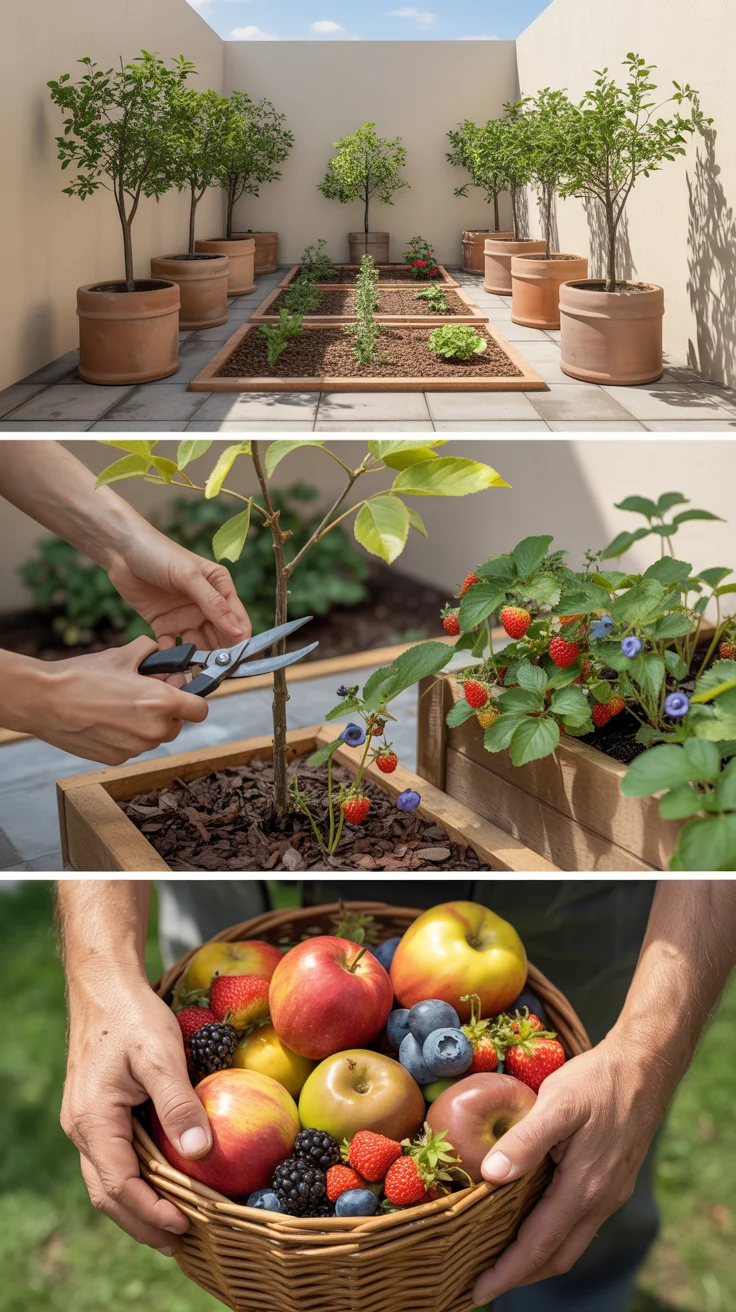
Water and mulch:
- Keep soil consistently moist during bloom and fruit sizing. Deep, infrequent watering is best for in-ground trees.
- Mulch 2–4 inches with wood chips, shredded leaves, or straw to moderate temperature and suppress weeds. Keep mulch off trunks and crowns.
Feeding:
- In early spring, apply a balanced, slow-release organic fertilizer. For heavy feeders like peaches, a light summer top-dressing may help.
- For blueberries, use fertilizers formulated for acid-loving plants and monitor pH.
Weed suppression:
- Mulch + occasional hand weeding is usually enough. In very tight spaces, lay down cardboard under mulch for an extra barrier.
Pollinators and beneficials:
- Plant pollinator strips (alyssum, marigold, borage) near trees and berries.
- Leave some habitat for beneficial insects—lacewings, lady beetles, and predatory wasps keep pests in check.
Common issues and fixes:
- Powdery mildew on apples/berries: Improve airflow; prune and thin; use sulfur sprays if needed.
- Brown rot on stone fruits: Prune for openness; remove mummified fruit; thin and avoid overhead watering near harvest.
- Birds on berries: Use netting or row cover tunnels during ripening.
- Aphids/mites: Blast with water, introduce beneficials, or use insecticidal soap when populations surge.
Frost protection:
- Keep floating row covers handy for late spring frosts, especially during bloom.
- Watering the day before a freeze can help buffered soils hold warmth.
Irrigation resiliency:
- Consider simple drip on a timer. If you want a broader resilience plan, pair your orchard with a rain barrel system—start here: Rainwater harvesting for small gardens.
Harvest timing, storage, and preservation
Your mini orchard will deliver in waves. Knowing when to pick and how to store (or preserve) extends enjoyment and reduces waste.
When to harvest:
- Apples: Lift and twist; if the fruit and stem separate cleanly and seeds are brown, it’s ready. Flavor should be fully developed.
- Pears: Pick when firm but mature and ripen indoors to avoid graininess.
- Peaches/nectarines: Fragrant, slight give at the stem, and full color (no green).
- Cherries: Full color and taste-test sweet or tangy depending on type.
- Figs: Soften and droop at full ripeness; pick gently to avoid splits.
- Blueberries: Deep blue with a matte “bloom,” and wait a few days after turning color for sweetness.
- Raspberries/blackberries: Berries should pull off with a soft tug; shiny fruit can still be sour—taste test.
Short-term storage:
- Refrigerate berries immediately; don’t wash until just before eating.
- Apples and pears store best in cool, humid conditions. Keep separate from ethylene-sensitive produce.
Batch your bounty:
- Dehydrate apple and pear slices for shelf-stable snacks.
- Freeze berries in a single layer, then bag—perfect for smoothies and baking.
- Can or freeze peaches and cherries at peak ripeness.
If you love shelf-stable pantry projects, you’ll appreciate The Lost Superfoods. It’s full of preservation ideas to turn your harvest into long-lasting staples.
Sharing and succession:
- Plant early-, mid-, late- season variants to avoid gluts.
- Spread picking across morning or evening to beat heat and preserve quality.
- Donate extra to friends or community fridges—or turn it into jam day traditions.
A sample layout for a small yard or patio
Visualizing your mini orchard can unlock hidden space. Here are two example layouts you can adapt:
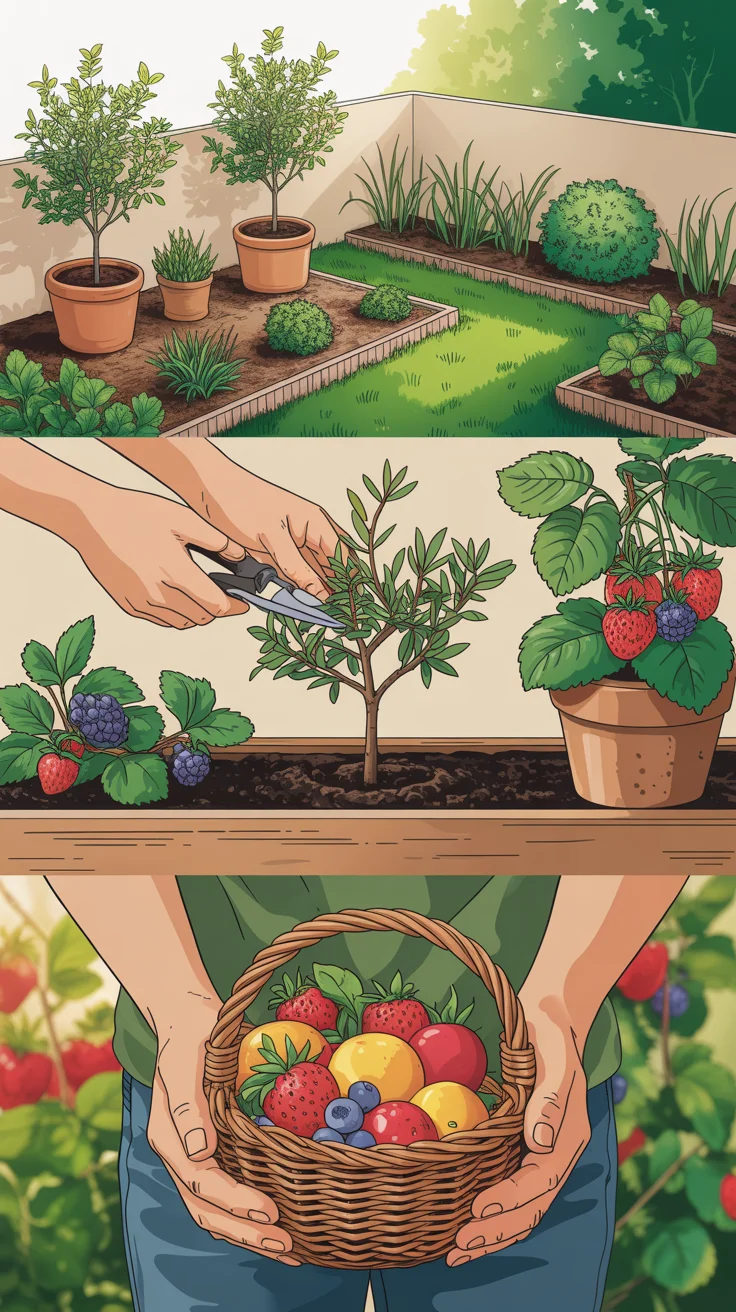
Narrow side yard (3–6 feet wide):
- Fence espalier: Two dwarf apples 10–12 feet apart, trained horizontally along wires.
- Understory: Strawberry border along the path.
- End-cap trellis: Thornless blackberry or primocane raspberry on a T-post trellis at the end.
Sunny patio:
- Container trio: 25-gallon fig, 20-gallon blueberry, 15-gallon dwarf Meyer lemon.
- Vertical accent: Strawberry tower or herb AquaTower near the back edge for height and extra greens.
- Moveables: Two rolling planters with everbearing strawberries flanking the doorway.
Corner bed:
- Open-center peach as centerpiece.
- Blueberries on the north edge; currants in the shadier corner.
- Drip line on a timer; wood-chip mulch throughout.
Helpful resources and tools to level up:
- Design and homestead planning: The Self-Sufficient Backyard
- Vertical, water-wise growing to complement your orchard: The AquaTower
- Preservation and pantry staples from your harvest: The Lost Superfoods
Also explore:
Conclusion: Your backyard mini orchard is closer than you think
With a handful of dwarf fruit trees + berries, you can create a lush, productive backyard “mini orchard” in any space—from a balcony brimming with containers to a side yard lined with trellised fruit. Start with the right varieties for your climate, use training systems that fit your footprint, and build a simple rhythm of pruning, mulching, and watering. Within a season or two, you’ll be picking fruit measured in bowls and baskets instead of handfuls, and every year gets better.
When you’re ready to go from “nice idea” to a truly self-sufficient micro-homestead, tap into the practical guidance in The Self-Sufficient Backyard. Pair that with a vertical add-on like The AquaTower for greens and herbs, and lock in your harvests with the preservation know-how in The Lost Superfoods. Your mini orchard will feed you—beautifully and reliably—for years.
FAQ
Which dwarf fruit trees are easiest for beginners?
- Peaches and nectarines (self-fertile, fast to bear), apples on true dwarf rootstocks (choose disease-resistant varieties), figs (especially in containers), and sour cherries are reliable starters. They train well, stay compact, and deliver early harvests in a backyard mini orchard.
Can dwarf fruit trees grow in containers?
- Yes. Use 15–30+ gallon containers with a high-quality, well-draining mix. Choose true dwarf trees or naturally compact species (fig, citrus). Provide regular water, annual top-dressing, and occasional root pruning. Blueberries, strawberries, and raspberries also thrive in containers.
How many years until dwarf fruit trees produce fruit?
- Many dwarf trees fruit in 2–4 years after planting, sometimes sooner for peaches, nectarines, and figs. Apples and pears may take 3–5 years depending on rootstock and care. Proper pruning, watering, and thinning speed up productive bearing.
What berry bushes grow best in small yards?
- Blueberries (in large containers with acidic soil), primocane raspberries (easy pruning: cut all canes each winter), thornless blackberries on trellises, everbearing strawberries in beds or towers, and compact currants/gooseberries for part-shade pockets. Mix types to extend the season.