
Introduction
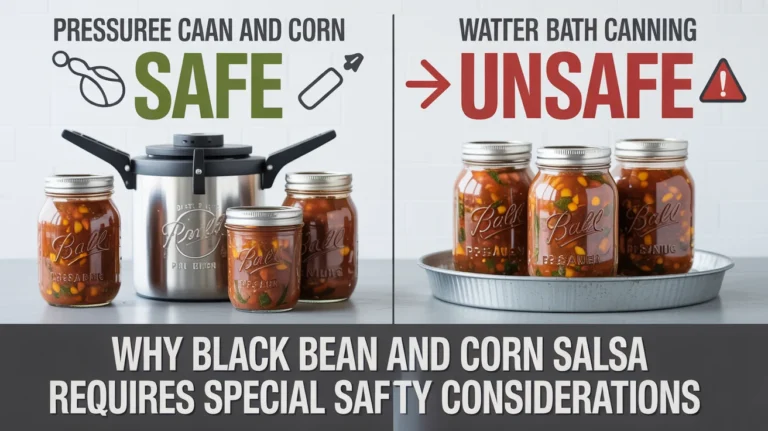
Canning black bean and corn salsa safely is one of the most commonly misunderstood topics in home food preservation. While traditional tomato-based salsas are often safe to preserve using approved methods, adding black beans and corn dramatically changes the safety equation. These ingredients are low-acid foods, and when canned improperly, they can create conditions where botulism thrives—an invisible but extremely dangerous toxin.
For homesteaders, preppers, and home cooks focused on long-term food storage, learning how to approach canning black bean and corn salsa safely is essential. This guide breaks down what’s safe, what’s risky, and what the experts actually recommend—without fear-mongering or guesswork.
If your goal is building a reliable, self-reliant pantry with confidence, resources like The Self-Sufficient Backyard can help you develop food independence skills that go far beyond a single recipe, including preservation methods that prioritize safety first.
In this article, we’ll cover whether black bean and corn salsa can be canned at all, how botulism risk develops, water bath vs pressure canning rules, and safer alternatives if traditional canning isn’t recommended.
Understanding the Risks of Canning Black Bean and Corn Salsa
Why Black Beans and Corn Change Everything
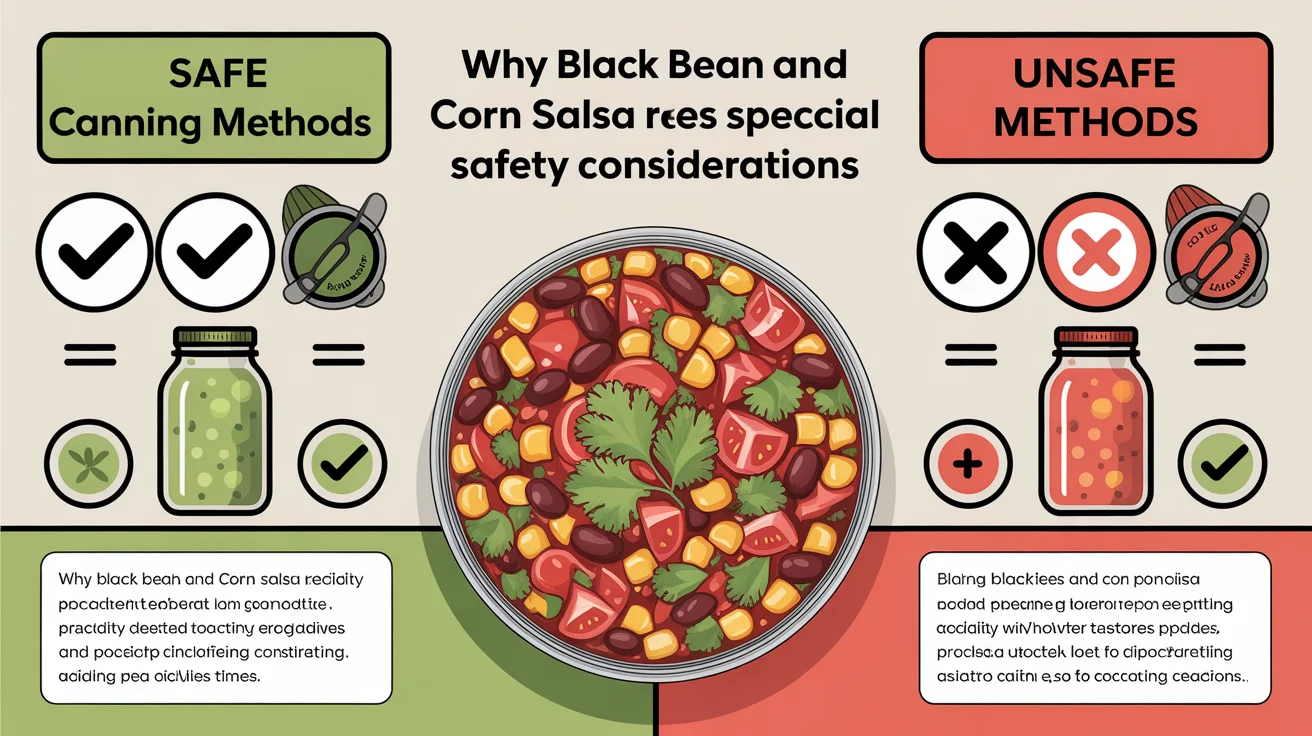
When discussing canning black bean and corn salsa safely, the first thing to understand is acidity. Safe canning depends heavily on whether a food is classified as high-acid or low-acid.
-
Tomatoes (with added acid) → high-acid
-
Black beans → low-acid
-
Corn → low-acid
Once beans and corn are added to salsa, the mixture is no longer reliably acidic enough to block bacterial growth. This is why many standard salsa recipes cannot simply be adapted by adding beans or corn and then water bath canning them.
The Botulism Risk Explained Simply
Botulism is caused by Clostridium botulinum, a bacterium that thrives in:
-
Low-oxygen environments (sealed jars)
-
Low-acid foods
-
Room-temperature storage
Improperly canned low-acid foods are the perfect environment for this toxin. What makes botulism especially dangerous is that:
-
You cannot see, smell, or taste it
-
Even small amounts can be life-threatening
-
Boiling after opening does not always neutralize risk
This is why experts stress that canning black bean and corn salsa safely is not about personal experience or tradition—it’s about tested, science-based methods.
Why Online Recipes Are Often Unsafe
A major reason people run into trouble is following:
-
Blog recipes without safety testing
-
“Grandma’s method” instructions
-
Water bath canning advice for bean or corn salsa
Many of these recipes were never tested for heat penetration, pH stability, or jar density. Unfortunately, popularity online does not equal safety.
Density Matters More Than You Think
Another hidden danger in canning black bean and corn salsa safely is food density. Thick salsas prevent heat from reaching the center of the jar during processing. Beans and corn both:
-
Increase thickness
-
Trap air pockets
-
Slow heat transfer
This makes under-processing extremely likely—even if the jars appear sealed.
Is It Safe to Can Black Bean and Corn Salsa?
When people ask whether canning black bean and corn salsa safely is possible, the most honest answer is: only under very strict conditions—and usually not the way most home canners expect. This is where official food safety guidance matters more than personal experience.
What the Experts Actually Say
According to USDA home canning standards and university extension testing, there are no widely approved water bath canning recipes for black bean and corn salsa intended for shelf storage at room temperature.
Why? Because:
-
Beans and corn are low-acid foods
-
Salsa mixtures vary too much in density and pH
-
Heat penetration cannot be reliably guaranteed in home settings
This means most black bean and corn salsa recipes you see online have not been safety-tested, even if they claim to be “approved.”
Tested Recipes vs. Homemade Variations
A critical rule of safe canning is this:
You may not add low-acid ingredients to a tested high-acid recipe and assume it remains safe.
For example:
-
Adding corn to a tested tomato salsa recipe ❌
-
Adding black beans to a vinegar-heavy salsa ❌
-
Thickening salsa before canning ❌
Even small changes can raise the pH above safe levels or alter heat flow inside the jar. This is why canning black bean and corn salsa safely is far more restrictive than most people realize.
Pressure Canning: Does It Make It Safe?
Many people assume pressure canning solves everything. While pressure canning is required for low-acid foods, there’s still a problem:
-
There are very few pressure-canned salsa recipes tested with beans and corn
-
Mixed-ingredient foods require lab-tested processing times
-
Without a tested recipe, pressure canning is still a gamble
In other words, pressure canning is necessary but not sufficient unless the recipe itself has been scientifically validated.
Why “It Sealed” Doesn’t Mean “It’s Safe”
A common and dangerous misconception in canning black bean and corn salsa safely is equating a sealed lid with safety.
A jar can:
-
Seal properly
-
Look normal
-
Sit on a shelf for months
…and still contain botulinum toxin.
Sealing only tells you the jar is airtight—not that it was processed correctly.
The Hard Truth Most Guides Don’t Say
To be completely clear:
-
❌ Most black bean and corn salsa should NOT be canned for shelf storage
-
✅ Freezing or refrigerating is usually the recommended safe option
-
✅ Shelf-stable alternatives require separate canning of components or tested commercial-style methods
This isn’t about discouraging self-sufficiency—it’s about ensuring your preservation efforts don’t put your household at risk.
If long-term food security is your goal, learning multiple preservation strategies—not just canning—can make your pantry safer and more resilient. Programs like The Lost Superfoods focus on shelf-stable food knowledge that doesn’t rely on risky canning shortcuts.
Water Bath vs Pressure Canning Salsa — What’s Actually Safe?
One of the biggest sources of confusion around canning black bean and corn salsa safely is choosing between water bath canning and pressure canning. Many home canners assume that if one method doesn’t work, the other automatically will—but that’s not how food safety works.
Let’s break this down clearly.
Is It Safe to Can Salsa in a Water Bath?
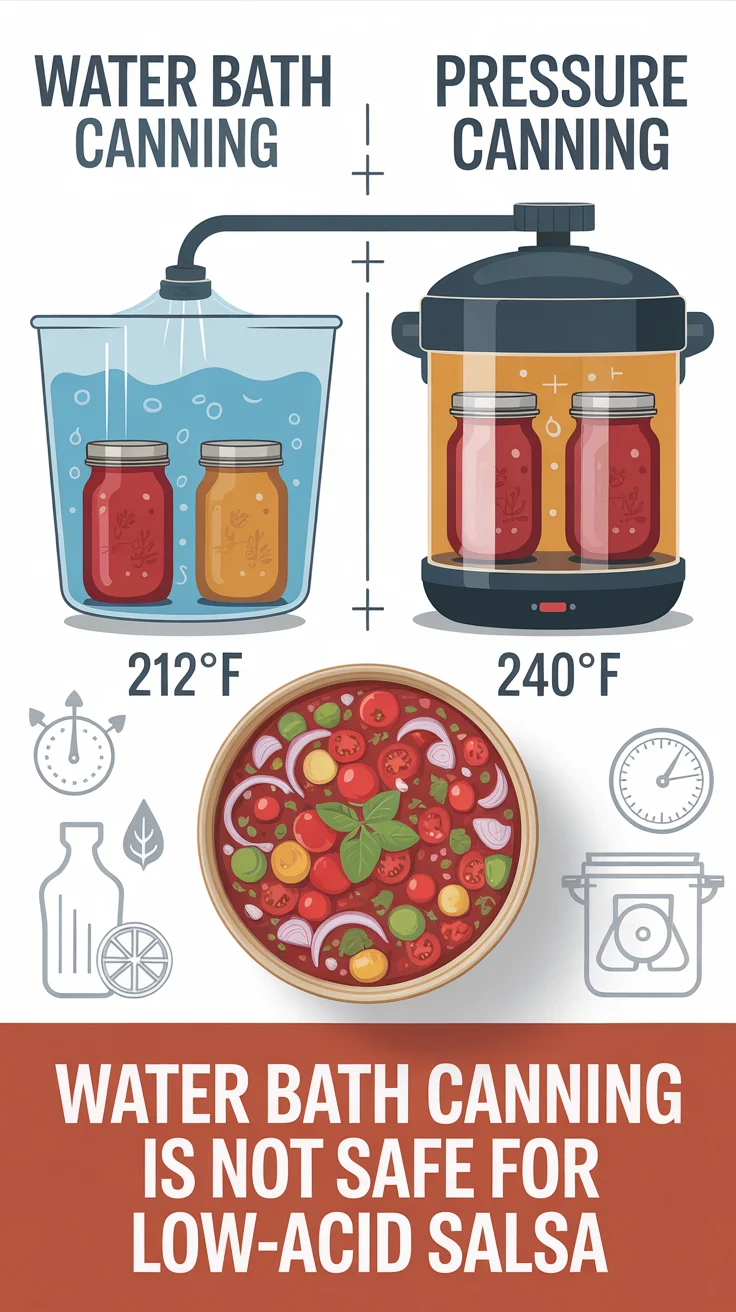
Water bath canning is only safe for high-acid foods.
This includes:
-
Plain fruits
-
Pickles
-
Jams and jellies
-
Tested tomato salsas with added acid
Once you introduce black beans or corn, your salsa becomes a low-acid food mixture, which immediately disqualifies it from water bath canning.
So when people ask:
“Is it safe to can black bean and corn salsa in a water bath?”
The answer is no under current safety guidelines.
Even if:
-
You add vinegar or lemon juice
-
The jars seal correctly
-
You extend processing time
Water bath canning cannot reach temperatures high enough to destroy botulism spores in low-acid foods.
Why Corn Salsa Usually Cannot Be Water Bath Canned
Corn is especially problematic in salsa canning because it:
-
Raises pH (lowers acidity)
-
Increases thickness
-
Slows heat penetration to the center of the jar
This makes canning black bean and corn salsa safely with a boiling water bath unreliable and unsafe, even when tomatoes are present.
Many “water bath corn salsa” recipes online are dangerous because they:
-
Are not lab-tested
-
Assume acidity based on taste
-
Ignore density and jar heat flow
Does Pressure Canning Make Black Bean and Corn Salsa Safe?
Pressure canning is required for low-acid foods, including:
-
Beans
-
Corn
-
Meats
-
Mixed low-acid recipes
Pressure canners reach 240–250°F (116–121°C), which can destroy botulism spores. However—and this is crucial—the recipe itself must still be tested.
Here’s the key issue:
-
Pressure canning kills spores ✔
-
But only if processing time + jar size + density are correct ✔
-
Most homemade salsa recipes do not have tested processing times ❌
Organizations like the National Center for Home Food Preservation stress that mixed-ingredient foods require specific, validated instructions, not educated guesses.
Without a tested recipe, pressure canning black bean and corn salsa is still unsafe.
Why “Just Pressure Can It Longer” Is Not a Solution
A common myth in canning black bean and corn salsa safely is that longer processing equals more safety. In reality:
-
Overprocessing can ruin food quality
-
It still may not guarantee even heat penetration
-
It does not compensate for unknown density variables
Food safety is not linear. More time does not automatically equal safer food.
The Safest Rule to Remember
When it comes to water bath vs pressure canning salsa:
-
✅ High-acid salsa (tested recipe) → water bath OK
-
❌ Black bean & corn salsa (untested) → do NOT can for shelf storage
-
✅ Beans and corn → pressure can separately, then combine when serving
This approach allows you to enjoy the flavors you love without risking botulism.
In the next section, we’ll focus on how to prevent botulism in canned salsa and what safety controls actually matter when preserving food at home.
How to Prevent Botulism in Canned Salsa
When the topic is canning black bean and corn salsa safely, botulism prevention is not optional—it’s the entire point. Understanding how botulism develops and how it’s prevented will help you make smarter preservation decisions, even when salsa canning isn’t recommended.
What Actually Prevents Botulism?
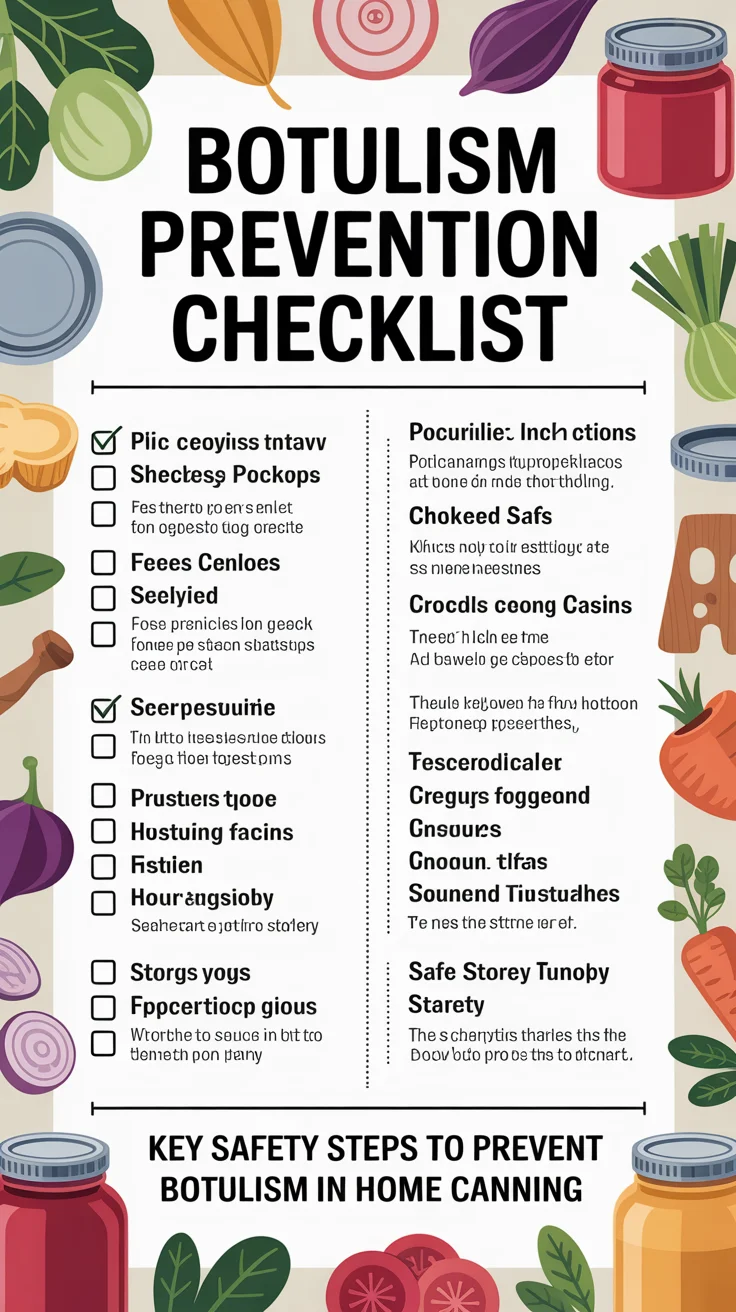
Botulism prevention in home canning relies on four non-negotiable controls:
-
Correct acidity (pH below 4.6)
-
Proper processing temperature
-
Verified processing time
-
Tested recipe density
If any one of these factors is off, the risk increases significantly.
For black bean and corn salsa, acidity is the biggest obstacle.
Acid Balance: Why Taste Is Irrelevant
Many people assume a salsa is safe because it “tastes tangy.” Unfortunately, taste has nothing to do with pH safety.
In canning black bean and corn salsa safely, acidity must come from:
-
Bottled lemon juice
-
5% acidity vinegar
-
Tested ratios of tomatoes and acid
Beans and corn dilute acid rapidly, making it extremely difficult to keep the entire jar below the safe pH threshold.
This is why adding extra vinegar to a favorite recipe is not a safe workaround unless the recipe has been lab-tested.
Why Headspace, Jar Size, and Heat Matter
Even with proper acidity, physical factors can sabotage safety:
-
Incorrect headspace traps air and prevents proper vacuum
-
Oversized jars reduce heat penetration
-
Thick salsas block even temperature distribution
In canning black bean and corn salsa safely, density is especially dangerous. The thicker the mixture, the harder it is for heat to reach the coldest point inside the jar.
Storage Conditions Matter More Than Most People Think
Safe canning doesn’t end when the jar seals.
To reduce risk:
-
Store jars in a cool, dark place
-
Avoid temperature fluctuations
-
Label jars clearly with dates and contents
-
Discard any jar that shows:
-
Bulging lids
-
Leaks
-
Off odors
-
Mold
-
⚠️ Never taste a questionable jar to “check” it.
Why Freezing Often Beats Canning for Salsa
For many households, the safest way to enjoy black bean and corn salsa long-term is freezing rather than canning.
Freezing:
-
Preserves flavor well
-
Eliminates botulism risk
-
Requires no acid manipulation
This makes freezing one of the best answers to how to prevent botulism in canned salsa—by not canning it at all.
For those focused on broader preparedness, combining freezing, dehydrating, and safe storage techniques creates a more resilient food system. Clean water access is a critical part of that equation, which is why systems like The AquaTower are often discussed in food security planning alongside preservation methods.
Can Corn Salsa Be Canned at All?
This is one of the most searched questions related to canning black bean and corn salsa safely, and the answer requires some nuance. While traditional corn salsa with beans mixed in is usually not recommended for shelf-stable canning, corn itself can be preserved safely—just not in the way most people expect.
The Core Problem With Corn Salsa
Corn creates multiple safety challenges when canning salsa:
-
It is low-acid
-
It significantly thickens the mixture
-
It increases density and heat resistance
-
It varies in moisture and sugar content
When combined with tomatoes, peppers, onions, and beans, corn turns salsa into a complex mixed food, which is exactly the type of recipe that requires laboratory-tested processing times.
This is why canning black bean and corn salsa safely almost never means canning the finished salsa itself.
Are There Any Tested Corn Salsa Recipes?
There are a very small number of tested corn salsa recipes published by extension services, but they typically:
-
Contain no beans
-
Use very specific ingredient ratios
-
Require added bottled acid
-
Have strict rules on jar size and processing time
Even then, these recipes:
-
Cannot be altered
-
Cannot be thickened
-
Cannot have extra vegetables added
If your recipe includes both black beans and corn, it almost certainly falls outside approved guidelines.
The Safest Workaround: Can Components Separately
One of the best-kept secrets of canning black bean and corn salsa safely is this:
You can can the ingredients safely—just not together.
Here’s how experienced home preservers do it safely:
-
Pressure can plain corn kernels
-
Pressure can plain black beans
-
Water bath can a tested high-acid tomato salsa
-
Combine everything after opening, just before serving
This method:
-
Preserves shelf stability
-
Maintains safety
-
Avoids botulism risk
-
Gives you flexibility with flavors
Freezing: The Most Practical Option for Corn Salsa
For most households, freezing remains the simplest and safest solution.
Freezing corn salsa:
-
Keeps texture surprisingly well
-
Preserves fresh flavor
-
Eliminates all canning-related safety concerns
Tips for best results:
-
Cool salsa completely before freezing
-
Use freezer-safe containers or bags
-
Leave headspace for expansion
-
Label with date and contents
If your goal is enjoying your recipe—not experimenting with food safety—freezing is often the smartest choice.
Refrigerated Storage for Short-Term Use
If you only need short-term storage:
-
Refrigerated corn salsa lasts 5–7 days
-
Always use clean utensils
-
Store below 40°F (4°C)
This option works well for seasonal batches without the risks associated with shelf storage.
The Big Takeaway
When asking whether corn salsa can be canned, remember:
-
❌ Black bean + corn salsa → not recommended for shelf canning
-
✅ Corn alone → pressure can safely
-
✅ Salsa without beans/corn → water bath if tested
-
✅ Full recipe → freeze or refrigerate
This approach aligns perfectly with the goal of canning black bean and corn salsa safely—by choosing methods that protect your health first.
Safe Alternatives to Canning Black Bean and Corn Salsa
If your goal is long-term storage without risk, the safest answer to canning black bean and corn salsa safely is often choosing a different preservation method altogether. Fortunately, there are several proven alternatives that preserve flavor while eliminating the dangers associated with low-acid canning.
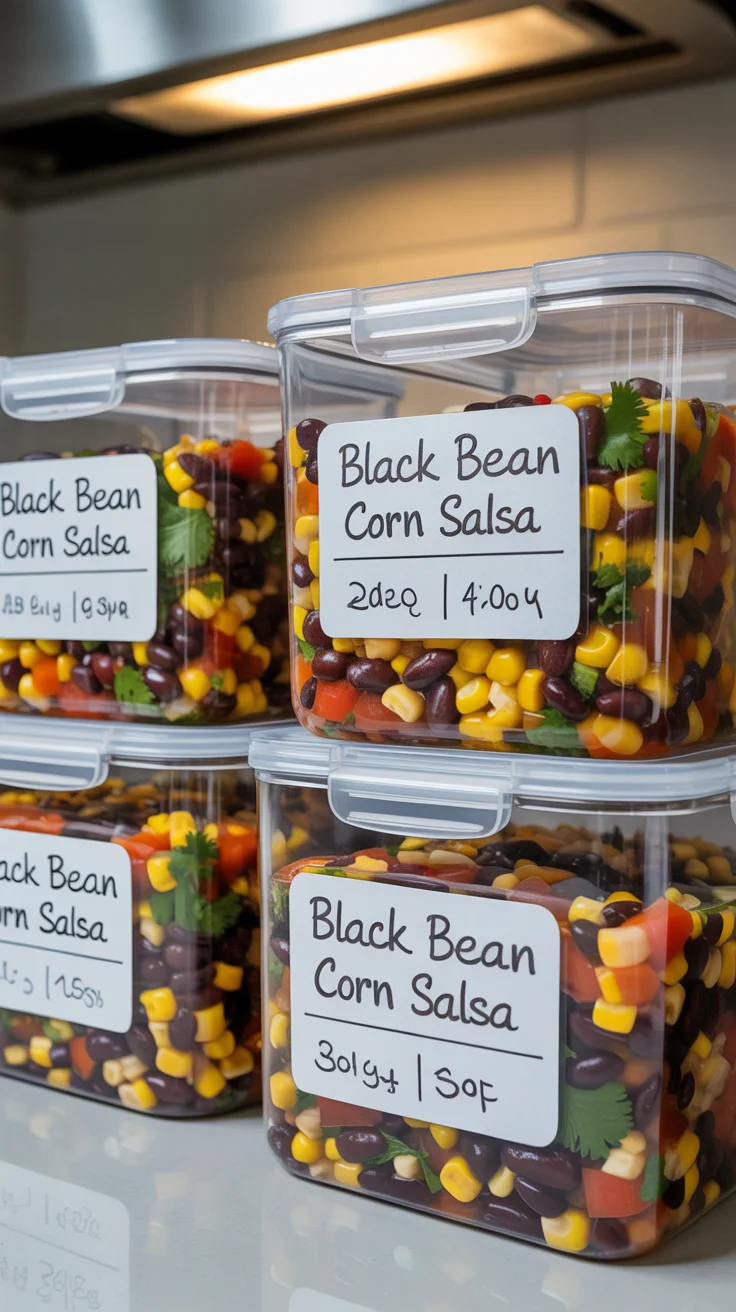
Freezing: The Gold Standard for Safety
Freezing is widely considered the best alternative to canning black bean and corn salsa.
Why freezing works so well:
-
Stops bacterial growth completely
-
Requires no acid adjustments
-
Preserves texture better than expected
-
No risk of botulism
Best practices:
-
Let salsa cool completely
-
Portion into meal-sized containers
-
Leave headspace for expansion
-
Freeze promptly at 0°F (-18°C)
For most households, freezing delivers the best balance of safety, quality, and convenience.
Refrigeration for Short-Term Storage
If you plan to use your salsa quickly:
-
Store in airtight containers
-
Keep refrigerated below 40°F (4°C)
-
Consume within 5–7 days
This option works well for fresh batches during peak garden season.
Dehydrating Ingredients Separately
Another smart workaround in canning black bean and corn salsa safely is dehydrating components individually.
You can safely dehydrate:
-
Cooked black beans
-
Corn kernels
-
Peppers
-
Onions
-
Herbs
Later, rehydrate and combine with:
-
Fresh tomatoes
-
Acidic ingredients
-
Spices
This method:
-
Reduces storage space
-
Extends shelf life significantly
-
Avoids risky mixed-food canning
Shelf-Stable Storage Without Canning the Salsa
If shelf stability is your priority, a hybrid approach works best:
-
Pressure can beans and corn separately
-
Water bath can tested tomato salsa
-
Store dehydrated spices
-
Combine fresh when needed
This system gives you maximum flexibility with zero safety compromise.
For people focused on preparedness and resilient food systems, expanding beyond one preservation method is essential. Educational resources like The Self-Sufficient Backyard help build that broader skill set—from gardening to preservation to storage.
Final Safety Checklist Before You Can Any Salsa
Before attempting canning black bean and corn salsa safely—or deciding not to—use this checklist to make sure you’re making a science-based, risk-aware decision. This step alone can prevent the most common (and most dangerous) home canning mistakes.
The Non-Negotiable Safety Checklist
Ask yourself every single time:
-
❓ Is this a tested recipe from a trusted authority (USDA or extension service)?
-
❓ Does the recipe include beans or corn?
-
❓ Is the food high-acid or low-acid?
-
❓ Is the processing method specified and validated?
-
❓ Am I following the recipe exactly, with no substitutions?
If any answer is unclear or “no,” shelf canning is not recommended.
Red Flags That Mean “Do Not Can”
When it comes to canning black bean and corn salsa safely, these are absolute stop signs:
-
❌ “Family recipe” with no testing
-
❌ Blog or video recipe without citations
-
❌ Water bath canning for beans or corn
-
❌ Thick, chunky salsa with mixed low-acid ingredients
-
❌ Advice that says “just add more vinegar”
No amount of experience replaces tested data.
What Is Safe to Can?
Use this as a quick reference:
-
✅ Plain black beans → pressure can only
-
✅ Plain corn kernels → pressure can only
-
✅ Tomato salsa (no beans/corn, tested) → water bath
-
❌ Black bean & corn salsa (mixed) → do not shelf-can
This framework keeps your pantry safe and functional.
After Canning: Storage & Monitoring Rules
Even properly canned food requires vigilance:
-
Store jars in a cool, dark place
-
Label with contents + date
-
Check seals before storage
-
Discard immediately if you notice:
-
Bulging lids
-
Leaks
-
Unusual odors
-
Mold
-
⚠️ Never taste food to “check” safety.
When in Doubt, Choose a Safer Method
The smartest canners aren’t the ones who can everything—they’re the ones who know when not to.
If your goal is enjoying homemade salsa without stress or risk, freezing or refrigerating your black bean and corn salsa is often the best final answer to canning black bean and corn salsa safely.
The Safest Way to Enjoy Black Bean and Corn Salsa
When it comes to canning black bean and corn salsa safely, the most important takeaway is this: food safety must always come before convenience. While traditional salsa recipes can often be canned safely using tested methods, the addition of black beans and corn changes the rules entirely.
Because beans and corn are low-acid foods, canning them together in salsa creates a serious risk for botulism unless very specific, tested procedures are followed—and for most home canners, those tested recipes simply do not exist. That’s why trusted food safety authorities consistently recommend avoiding shelf-stable canning of mixed black bean and corn salsa.
The good news is that you still have excellent options:
-
Freeze black bean and corn salsa for long-term use
-
Refrigerate it for short-term enjoyment
-
Can ingredients separately using approved methods
-
Combine components fresh when serving
This approach lets you enjoy the flavors you love without putting your household at risk.
Ultimately, mastering canning black bean and corn salsa safely isn’t about limiting your self-sufficiency—it’s about strengthening it with knowledge, flexibility, and science-backed decisions.
Frequently Asked Questions (FAQ)
Is it safe to can black bean and corn salsa?
In most home settings, no. Black beans and corn are low-acid foods, and when combined in salsa, they create conditions where botulism can develop unless a tested, approved recipe is used. Freezing or refrigerating is usually the safest option.
How do you prevent botulism in canned salsa?
Botulism prevention depends on:
-
Correct acidity
-
Proper processing temperature
-
Tested processing times
-
Verified recipe density
Because black beans and corn lower acidity and increase thickness, preventing botulism in shelf-canned salsa is extremely difficult without lab-tested recipes. Choosing alternative storage methods is often the safest prevention strategy.
Can corn salsa be canned?
Corn salsa can only be canned if it follows a very specific, tested recipe—usually without beans and without recipe modifications. Most homemade corn salsa recipes are not safe for shelf canning and should be frozen instead.
Is it safe to can salsa in a water bath?
Only high-acid, tested salsa recipes (typically tomato-based with added acid) are safe for water bath canning. Salsa containing black beans or corn is not safe for water bath canning.
What is the safest way to store black bean and corn salsa?
The safest methods are:
-
Freezing for long-term storage
-
Refrigeration for short-term use
-
Canning ingredients separately and combining later
These methods eliminate botulism risk while preserving quality.