
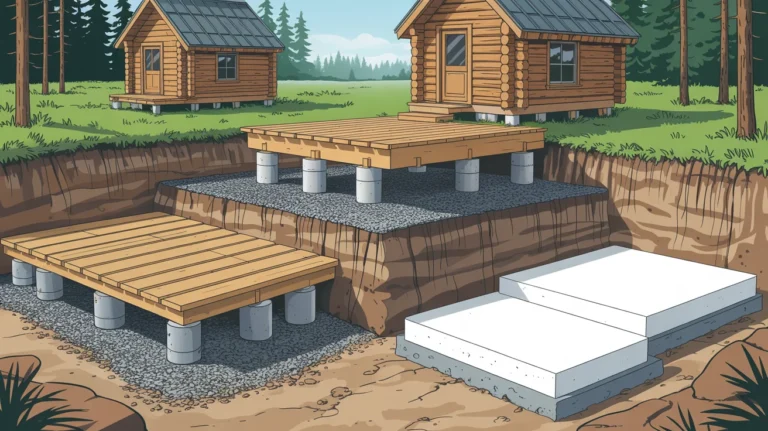
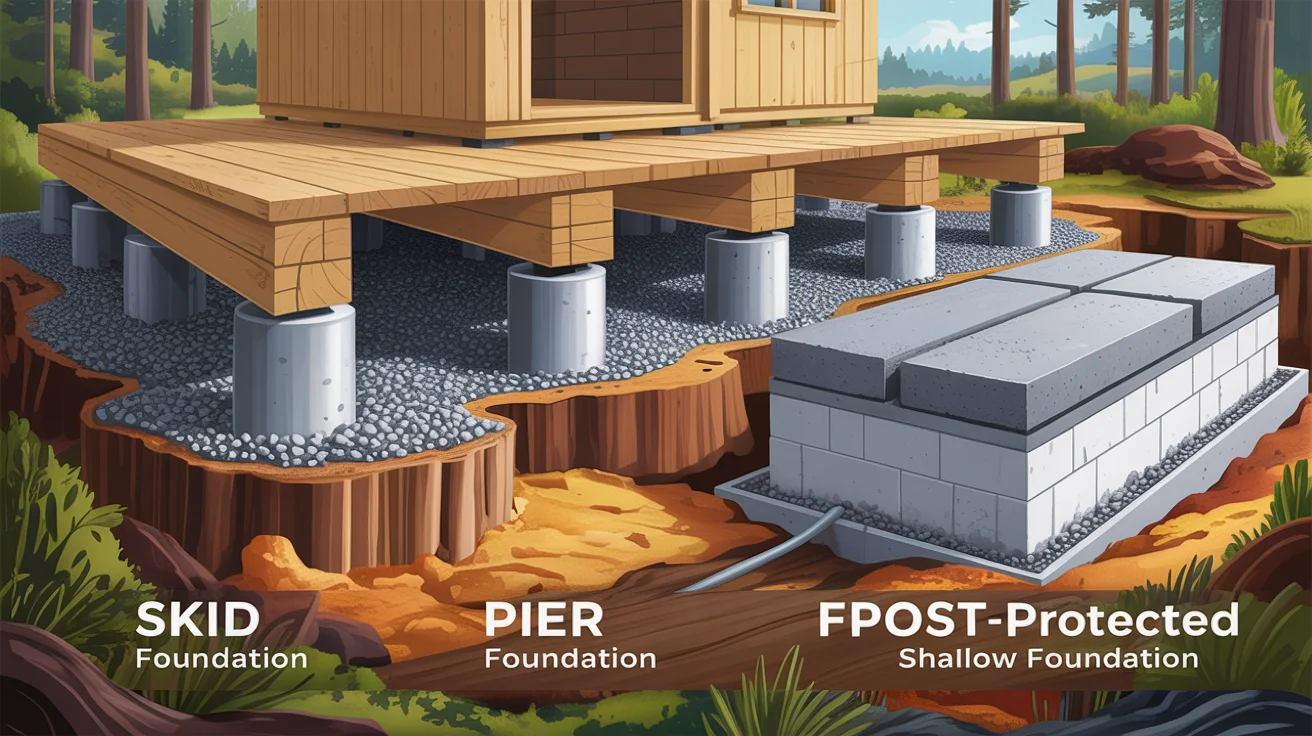
A rock-solid cabin starts at ground level—literally. Choosing among budget off-grid cabin foundation options (skids vs piers vs FPSF) determines how much you spend now, how well your cabin resists frost heave and wind, and how easy future repairs will be. This guide breaks down the practical pros, cons, and ideal use-cases for each foundation type, so you can match your site, climate, and budget—without overbuilding or under-preparing.
If your off-grid goals include growing food, water independence, and resilient power, pair your build plan with The Self-Sufficient Backyard—a compact homestead blueprint that saves costly trial-and-error. Check it out here: The Self-Sufficient Backyard
How loads, soil, and site conditions determine the right foundation
Before choosing skids, piers, or an FPSF, translate your site and cabin plan into the forces your foundation must safely carry and resist. This upfront clarity avoids costly changes mid-build.
- Cabin weight and footprint:
- A small 10×12 or 12×16 cabin shell with minimal interior load can sit on robust skids or piers.
- Heavier loads—masonry stoves, water tanks, or full-time living assemblies—push you toward deeper piers or an insulated slab (FPSF).
- Frost depth and climate:
- In seasonal frost regions, ground freeze-thaw cycles can jack shallow supports unless they’re insulated, properly drained, or anchored below frost line.
- Mild-climate or frost-free zones provide more flexibility for skids and shallow piers.
- Soil type:
- Dense gravel and sandy gravels drain well and support skids or piers.
- Clays expand and contract with moisture: prioritize deep piers below frost line or well-designed FPSF with drainage.
- Organic/peaty soils are compressible: consider removing and replacing with engineered fill or use deep piers/helical piles to reach competent strata.
- Slope and access:
- On moderate slopes, piers or helical piles shine—easy to vary heights without massive excavation.
- Skids can work on gentle slopes with careful grading, terracing, or additional blocking.
- Wind, uplift, and seismic:
- Open areas or ridgetops require solid tie-downs and uplift resistance.
- Seismic zones favor continuous or well-tied pier systems over loose blocks.
- Build logistics:
- Remote sites without heavy equipment favor skids or piers you can stage and build by hand.
- If you’re pouring concrete, plan access for materials and water, or consider helical piles installed with light machinery.
If you’re new to layout and loads, start here: [How to square and stake a cabin site](INTERNAL LINK PLACEHOLDER) and [How to design cabin drainage and swales](INTERNAL LINK PLACEHOLDER). Good layout, geotextile, and compacted gravel do more for longevity than overspending on materials in the wrong place.
Where skid foundations fit into budget off-grid cabin foundation options
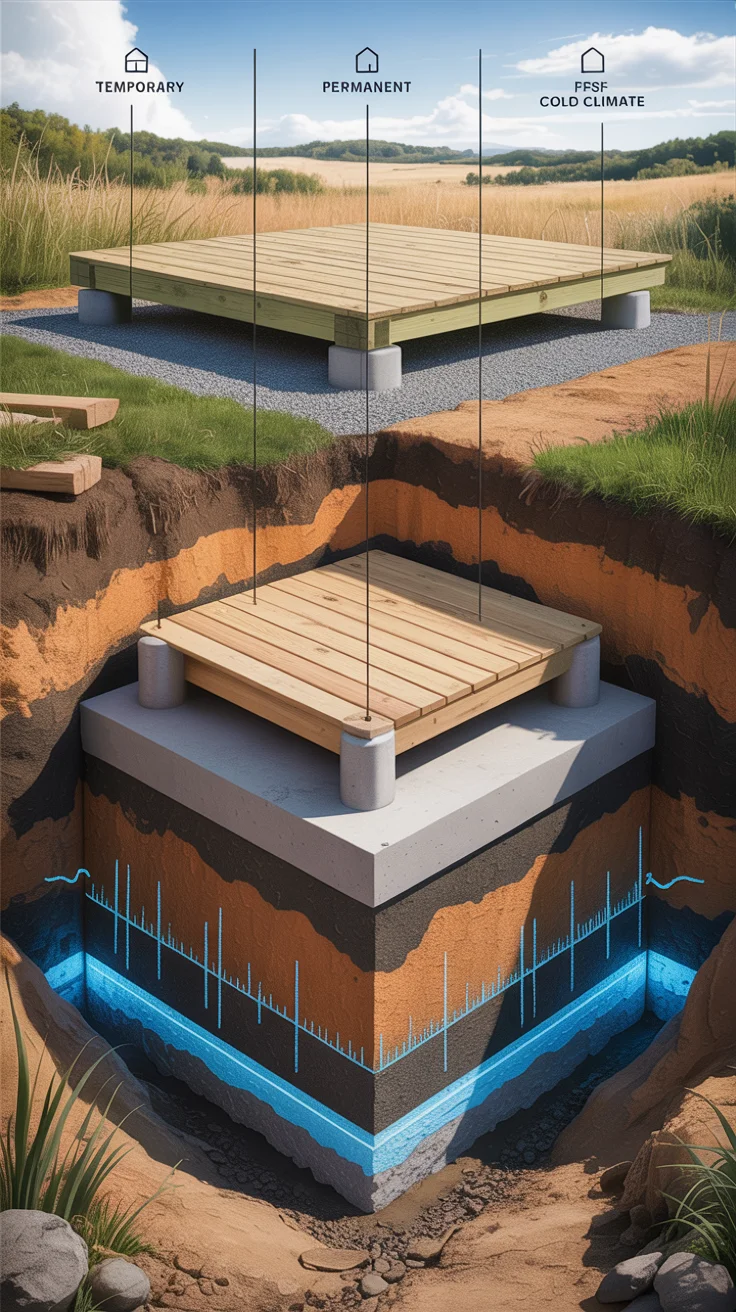
Skid foundations are the most DIY-friendly, fast, and affordable way to get a small off-grid cabin on the ground and weathered-in—especially for portable or seasonal structures.
- What a skid foundation is:
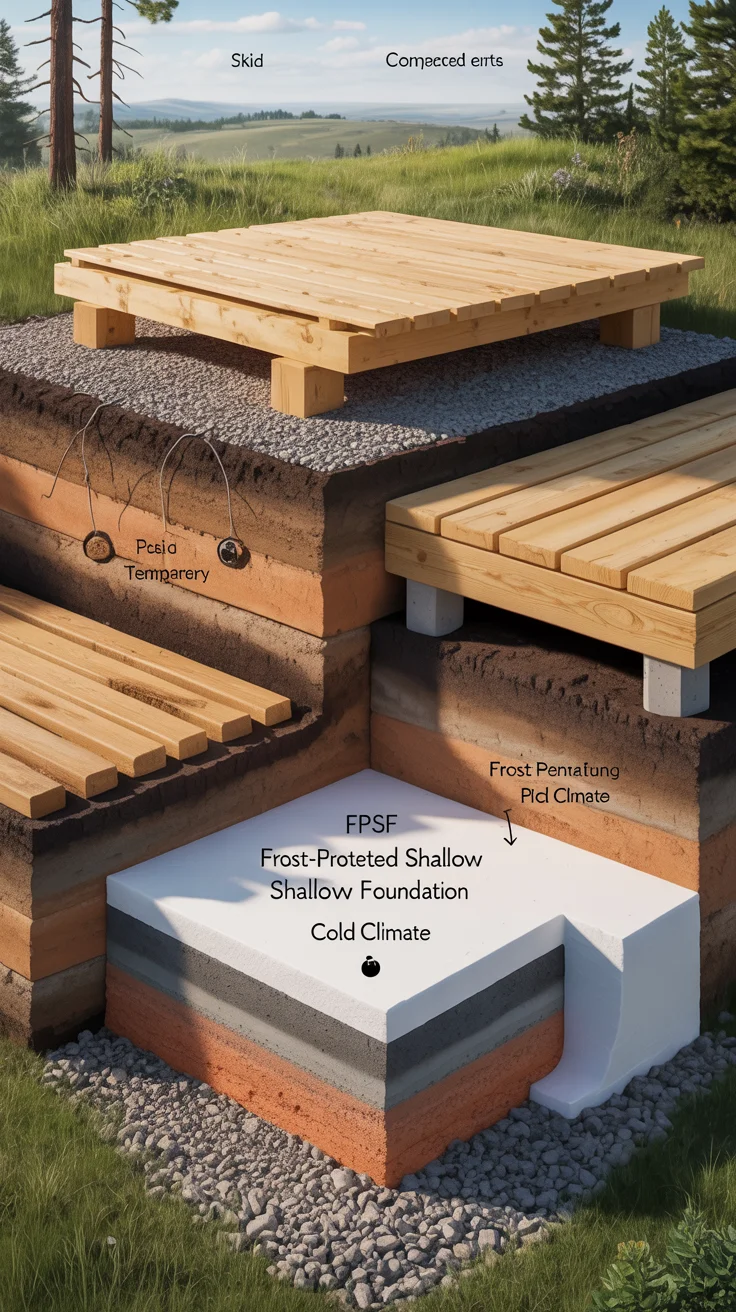
- A set of parallel, pressure-treated beams (often 6×6 or 8×8) laid on grade over a compacted gravel bed (with geotextile fabric underneath), supporting the cabin floor joists.
- Loads are spread along the length of each skid rather than concentrated at posts.
- Why skids are budget-friendly:
- Minimal digging, no concrete, and simple tools.
- Flexible siting: you can shift or realign during layout.
- Fast: a long weekend can take you from bare ground to subfloor.
- Best uses:
- Small seasonal cabins or sheds (e.g., 10×12, 12×16, 12×20).
- Frost-free or light-frost climates with well-drained soils.
- Portable or temporary cabins where moving or reselling might occur.
- Gentle, uniform slopes you can terrace with gravel.
- Key details that make skids last:
- Site prep: Strip organic topsoil. Install geotextile fabric and 4–6 inches of compacted, angular gravel (not pea gravel) to break capillary moisture.
- Leveling: Use string lines and laser or water level to keep skids co-planar; shim with composite or PT shims—not random wood scraps.
- Drainage: Crown the gravel pad slightly and slope away from the building; add shallow swales upslope to divert runoff.
- Rot and pests: Use ground-contact rated PT lumber, consider a capillary break (peel-and-stick membrane) between skids and joists, and install a termite shield if needed.
- Anchoring: Even with skids, add ground anchors or deadmen straps against uplift and sliding. Skids resting on loose blocks without anchors risk movement.
- Airflow and skirting: Leave ventilation under the cabin. If you add skirting, use vented panels and maintain airflow to control moisture.
- When skids are a poor fit:
- Deep frost in expansive clay without insulation and proper drainage (heave risk).
- Steep, variable terrain where grading would be extensive.
- Heavy, permanent loads (masonry stoves, big lofts) without upgrading to larger skids, closer spacing, or hybrid piers under point loads.
Quick build tip: Schedule your skid layout the same day you set up temporary power and water. For remote sites, a compact, portable power source like the Ultimate OFF-GRID Generator lets you run saws and charge tools when the grid is miles away.
Pier foundations for uneven ground and long-term stability
Pier foundations use posts or columns (concrete, masonry, or helical piles) to carry loads down to stable soil, often below frost depth. They excel on sloped or variable ground and where you want underfloor access.
- Concrete pier basics:
- Dig or auger holes below frost depth; widen bottoms for better bearing (footings).
- Set Sonotube forms, rebar cages, and pour concrete to a consistent height.
- Embed post bases or Simpson-type brackets for beams.
- Use a laser level to align all tops co-planar.
- Helical piles (screw piles):
- Steel shafts with helix plates screwed into the ground to engineered torque; excellent for poor soils or tight sites.
- Instant load-bearing without waiting for concrete cure.
- Require install equipment (mini-excavator or specialized drive head), usually by a contractor.
- Why piers are popular off-grid:
- Great for uneven terrain—adjust pier heights to meet a level beam.
- Superior frost protection when below frost depth.
- Easier to run plumbing, waste lines, or graywater under the cabin.
- Minimal site disturbance versus a full slab.
- Pros:
- Adaptable to slope and mixed soils.
- Strong long-term support for permanent cabins.
- Good uplift resistance with proper brackets/ties.
- Cons:
- More layout precision needed to align beams and joists.
- Concrete work adds complexity and weather dependency.
- Helical piles add cost but can pay off in problem soils.
- Best uses:
- Permanent off-grid cabins in frost zones.
- Sites with moderate slope or variable soil depth.
- Heavier cabins or those with interior point loads (stoves, mezzanines).
- Build keys:
- Layout: Square your grid carefully; measure diagonals twice, dig once.
- Drainage: Backfill piers with gravel at the top and flare grade away to prevent ponding.
- Bracing: Install diagonal bracing or knee braces between posts and beams in high winds.
- Connections: Use rated hardware and hot-dip galvanized fasteners for longevity.
If you’re building solo and want reliable water on site without hauling, a compact, gravity-friendly solution like The AquaTower can simplify cleanup, mixing concrete, and daily chores—especially before your permanent water system is installed.
FPSF foundations for four-season comfort in cold climates
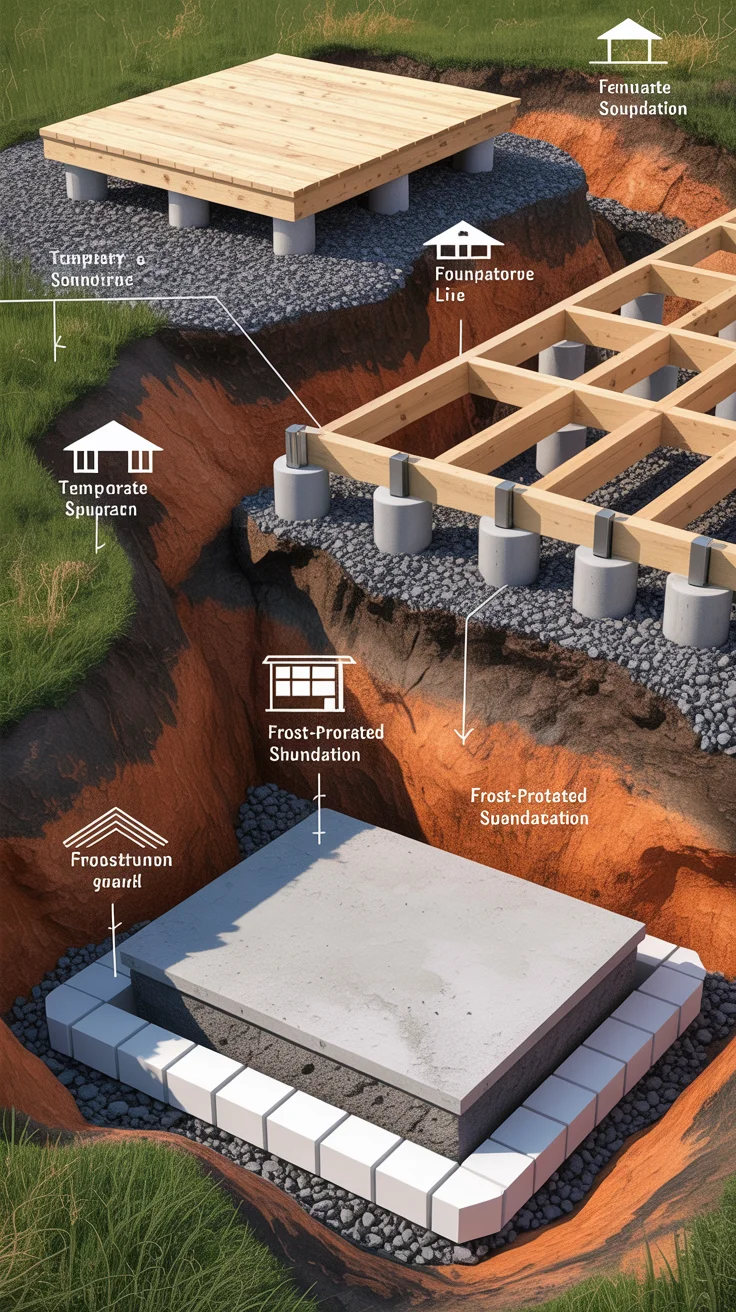
An FPSF—Frost-Protected Shallow Foundation—is a code-recognized shallow slab (or grade beam) that uses horizontal and vertical rigid foam insulation to keep the soil beneath from freezing, reducing frost heave risk without digging to full frost depth.
- How FPSF works:
- The cabin’s heated interior and the insulation “wing” around the foundation keep subgrade temperatures above freezing.
- Insulation directs ground heat upward and outward, reducing frost penetration.
- What it looks like:
- A compacted gravel base, vapor barrier, reinforcement, and a monolithic or stem-wall slab.
- Rigid foam (commonly XPS or EPS rated for below-grade use) placed vertically against the slab edge and horizontally extending outward around the perimeter per design tables.
- Drainage layer and terminations to shed water away from the slab.
- Pros:
- Warm floor, great for year-round living.
- Reduced excavation versus a deep footings slab.
- Strong lateral resistance and a clean, sealed building perimeter.
- Good resale perception and insurability.
- Cons:
- Requires attention to detail: correct foam type, thickness, and wing dimensions by climate zone.
- Excavation, compaction, and concrete finishing skills needed.
- Less forgiving on rocky sites without machinery.
- Best uses:
- Four-season cabins in cold climates with moderate frost depth.
- Sites with decent access for materials and equipment.
- When you want radiant heat options and critter-proof underfloor.
- Critical details:
- Follow code-approved tables for insulation sizing based on climate (and whether the building is heated continuously or intermittently).
- Provide robust drainage: perimeter drains in wet soils, positive surface drainage away from slab, and capillary breaks to control moisture.
- Termite considerations in certain regions: foam protection or inspections per local requirements.
- For intermittent heating (weekend cabins), additional insulation or strategies may be needed to maintain soil temps; consult local code guidance.
For in-depth planning, see: Frost-depth map and code lookup and Cabin radiant floor basics. Getting the foam and water details right makes the difference between a cozy slab and seasonal heave.
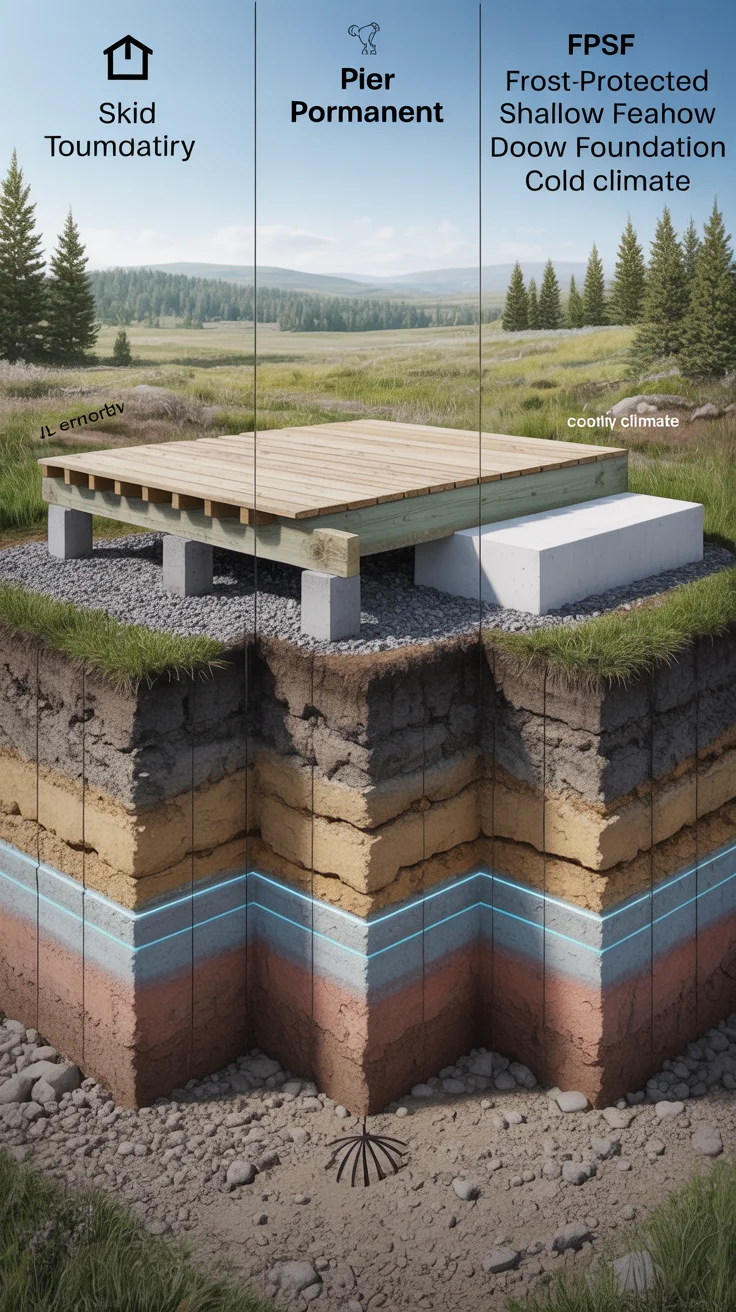
Skids vs piers vs FPSF: cost, speed, and durability compared
You’re choosing a compromise among speed, budget, and long-term performance. Here’s a straightforward comparison to guide decisions.
- Speed to dried-in shell:
- Skids: Fastest. Minimal ground work; great for weekend progress.
- Piers: Moderate. Layout precision and concrete cure (unless helical) add time.
- FPSF: Slowest upfront due to excavation, formwork, insulation, and concrete finishing.
- Upfront cost profile:
- Skids: Lowest material cost and tool burden. Gravel, geotextile, and PT beams drive the budget.
- Piers: Moderate. Concrete, rebar, forms, or helical pile install adds cost. More hardware and bracing.
- FPSF: Highest upfront. Foam, gravel, reinforcement, and finishing labor.
- Long-term durability:
- Skids: Very good when well-drained, anchored, and ventilated; can still be susceptible to movement in expansive soils or frost without mitigation.
- Piers: Excellent when below frost depth with good connections and bracing.
- FPSF: Excellent with proper insulation and drainage; also improves energy performance.
- Adjustability and access:
- Skids: Easy to shim and re-level; underfloor access is straightforward.
- Piers: Easy access for plumbing and repairs; height tweaks are possible but more involved.
- FPSF: Minimal adjustability; everything is embedded, but performance is stable.
- Slope handling:
- Skids: Good on gentle slopes; requires terracing or cribbing.
- Piers: Best for moderate slopes; variable pier heights are simple.
- FPSF: Best on relatively flat sites; cut-and-fill may be required.
- Code and resale:
- Skids: May face scrutiny for permanent dwellings; often fine for accessory or seasonal structures when allowed.
- Piers: Widely acceptable with engineered details; good for permanent use.
- FPSF: Strong for permitted, four-season residences.
- Who each is for:
- Choose skids if you need a fast, low-cost base for a small cabin, tool shed, or a starter shell you may move.
- Choose piers if you want a permanent cabin on uneven ground, with easy access underfloor.
- Choose FPSF if you’re building a four-season home in a frost climate and want warm floors and excellent longevity.
While you plan, think beyond the foundation: a resilient power plan pays back immediately on remote sites. A compact system like the Ultimate OFF-GRID Generator can bridge you from build phase to a full solar setup, and resources like The Self-Sufficient Backyard help you prioritize water, food, and energy systems in the right order.
Soil and climate decision framework for choosing the right foundation
Use this practical pathway to match your site to the right system. If two options fit, pick the one that minimizes your site’s biggest risk (water, frost, or movement).
- Step 1: Map frost, water, and slope risks
- Frost: If seasonal frost depth is greater than 18–24 inches, expect heave unless you go below frost line (piers) or design an FPSF.
- Water: If the site ponds or has high groundwater, prioritize drainage, deeper supports (piers), or an FPSF with robust drains. Avoid skids on wet clay without serious prep.
- Slope: Over about 10–12% slope, piers or helical piles dramatically reduce earthwork.
- Step 2: Probe soils
- Gravelly/sandy: Drains well; skids or piers perform well. FPSF still great if four-season living.
- Clay: Expansive; choose deeper piers below frost or FPSF with meticulous drainage and insulation. If using skids, overbuild drainage and expect periodic leveling.
- Organic/peat: Remove and replace with engineered fill or go to deep supports (helical piles) that bypass poor soils.
- Bedrock/shaley: Shallow bedrock favors adjustable piers bolted to rock; skids can work with cribbing but anchoring is tricky.
- Step 3: Match to use and weight
- Light seasonal cabin (no heavy stove, small footprint):
- Skids in good-draining soils.
- Piers in frost or slope.
- Permanent cabin, heavier loads:
- Piers below frost in mixed soils or slope.
- FPSF in cold climates on flatter ground.
- Light seasonal cabin (no heavy stove, small footprint):
- Step 4: Consider build logistics
- Hand tools, limited access: Skids or concrete piers with small augers. Helical piles if you can hire a small crew for a day.
- Weather windows: If freeze is looming, skids or helical piles keep you moving without concrete cure delays.
- Step 5: Plan risk mitigations
- For skids: Extra gravel thickness, geotextile, wing drains, ground anchors, and breathable skirting.
- For piers: Diagonal bracing, correct beam sizing, tie-downs, and flood-clearance in wet zones.
- For FPSF: Proper foam selection/thickness per climate, continuous insulation, and intact drainage paths.
Keep the big picture in mind: foundation, power, and water form the backbone of a livable off-grid setup. If you’re prioritizing self-reliance in phases, tools like The Self-Sufficient Backyard and emergency-ready foods from The Lost Superfoods can make the early months smoother while you finalize permanent systems.
Build checklists, anchoring, and maintenance that stretch your budget
You can squeeze years of extra life out of any budget foundation with the right prep and routine care. Use these checklists to avoid the most common failures.
- Universal site prep checklist:
- Strip organics to firm subgrade; fill low spots with compacted crushed stone.
- Install geotextile fabric to separate soil from gravel and prevent pumping and settlement.
- Compact in thin lifts; aim for a smooth, crowned pad and positive drainage in all directions.
- Add a perimeter swale and level spreaders upslope to divert water.
- Keep vegetation back from the perimeter; roots and leaf mold retain moisture against materials.
- Skid-specific upgrades:
- Use ground-contact rated PT beams; consider double or triple skids for larger spans.
- Set skids on continuous compacted gravel beams or on broad pads; avoid random cinder blocks that can wedge or crack.
- Add deadmen or earth anchors connected with galvanized straps to resist uplift and sliding.
- Install vented skirting with removable panels for inspection.
- Pier-specific upgrades:
- Tie posts, beams, and joists with rated hardware; use hot-dip galvanized connectors in wet zones.
- Add knee braces or X-bracing between posts to stiffen against racking.
- In flood-prone areas, elevate the floor system and provide flood vents if required.
- For helical piles, ensure install torque is recorded and meets engineer specs.
- FPSF-specific upgrades:
- Protect exposed foam edges with cement board, stucco, or treated metal flashing.
- Maintain drainage paths and keep organic mulch away from the slab edge.
- Seal slab penetrations and consider a capillary break under sill plates.
- Maintenance routines:
- Annual inspection after freeze-thaw: re-level shims (skids), check pier plumb/beam alignment, confirm anchor tension and hardware condition.
- After severe weather: verify no scour around piers and that skirting remains vented and intact.
- Keep gutters and perimeter drains clear; water management is the first line of defense.
For next steps, see Beginner’s guide to framing a cabin floor and DIY off-grid inspection prep checklist. Also consider bridging your utility gap with reliable build power from the Ultimate OFF-GRID Generator until your permanent solar array is wired.
Permits, inspections, and future-proofing your investment
Even off-grid builds are subject to local codes and zoning. A modest time investment here can save you fines, rebuild orders, or insurance headaches down the road.
- Zoning and siting:
- Confirm allowable uses, setbacks, and size limits for accessory structures versus dwellings.
- Check floodplain maps and elevation requirements; some zones require specific foundation heights or flood vents.
- Building code considerations:
- Frost depth dictates footing depth for piers; verify your local design frost depth.
- FPSF requires adherence to approved details and insulation sizing per climate and whether heating is continuous or intermittent.
- Decks, stairs, and guardrails connect to the foundation—ensure their loads are accounted for in pier layout and hardware.
- Inspections and documentation:
- For concrete piers: Expect footing and rebar inspections before pour; final framing inspections may review connections.
- For helical piles: Keep install torque logs and manufacturer specs for future reference.
- For skids: Some jurisdictions allow them for non-habitable structures or temporary buildings; if habitable, you may need an engineered design or alternative compliance path.
- Resale and insurance:
- Document soil conditions, drainage measures, and materials used.
- Keep photos of underground work (drains, foam, footings) and inspection sign-offs.
- Buyers and insurers favor clear records and recognized foundation systems (piers and FPSF). Skids can be fine if permitted and well-constructed.
If you need a step-by-step for code lookups and frost mapping, start here: Frost-depth map and code lookup. Planning to live full-time? Don’t forget your power and water plan—combining a reliable starter power source like the Ultimate OFF-GRID Generator with a simple, self-reliant water system such as The AquaTower keeps your build on schedule.
Putting it all together: a simple path to the right foundation
- If you want the fastest, cheapest base for a small, light, potentially portable cabin on well-drained ground: choose skids with excellent drainage, anchors, and ventilation.
- If your site is sloped, frost-prone, or you’re building a heavier, permanent cabin: choose piers (concrete or helical) below frost, with solid bracing and tie-downs.
- If you’re committing to a four-season cabin in a cold climate on relatively flat ground and want warm floors and top-tier durability: choose an FPSF with correct insulation and drainage.
Foundations don’t live in isolation. As you plan your off-grid life, consider this trio for a smoother first season:
- The Self-Sufficient Backyard: a practical blueprint for water, food, and energy systems on small homesteads.
- Ultimate OFF-GRID Generator: portable power during the build and as a backup for storms.
- The AquaTower: straightforward water independence while you establish a permanent system.
If food resilience is on your checklist, The Lost Superfoods offers compact, shelf-stable options ideal for off-grid stocking—handy during build phases and winter storms.
FAQ
- What is the cheapest foundation for a small cabin?
- For most small, light cabins on well-drained, relatively flat sites, a properly built skid foundation is typically the cheapest. It uses pressure-treated beams on compacted gravel with geotextile, minimal excavation, and basic tools. Keep in mind that “cheapest” only works long-term if you invest in drainage, anchoring, and ventilation. In frost or expansive clays, skids may need extra mitigation—or you’ll be better off with piers.
- Skids vs piers: which is better for uneven ground?
- Piers win on uneven or sloped ground. You can vary pier heights to create a level beam line with less earthwork. Piers set below frost depth also resist heave better. Skids can work on gentle slopes with terracing and careful leveling, but beyond a modest grade, the effort to create a flat, stable pad outweighs their simplicity.
- What is an FPSF foundation and when is it used?
- An FPSF (Frost-Protected Shallow Foundation) is a shallow concrete slab or grade beam that uses rigid foam insulation around and under the perimeter to keep the soil from freezing. It’s used in cold climates to prevent frost heave without digging deep footings. It’s ideal for four-season cabins on relatively flat sites, offering warm floors, energy efficiency, and strong long-term stability—provided you follow climate-specific insulation and drainage details.
- How do you choose the right foundation for your soil and climate?
- Start by mapping frost depth, drainage, and slope. In frost-free or well-draining sandy soils, skids are a great low-cost option for small cabins. In frost with clay or on slopes, piers below frost depth are a safer bet. For four-season comfort in cold climates on flatter ground, an FPSF provides a durable, insulated base. Always tailor to your loads (stoves, water tanks), local codes, and access to materials or equipment. This aligns with the core guidance in Budget Off-Grid Cabin Foundation Options (Skids vs Piers vs FPSF) + When to Use Each.
- Do I need permits for a skid or pier foundation?
- Often yes, especially for habitable structures. Some areas allow small accessory buildings without permits, but dwellings typically require them regardless of being off-grid. Check zoning, setbacks, frost requirements, and floodplain rules before you dig.
- Can I convert a skid cabin to piers later?
- Sometimes. If your cabin is small and accessible, you can jack and crib the structure, install new piers underneath, and set beams on brackets. Plan for lifting points and avoid water tanks or masonry loads until you upgrade.
- How do I prevent frost heave with skids?
- Focus on drainage and insulation: remove organics, use geotextile, install a deep, compacted gravel pad that extends past skids, and consider wing drains. In colder climates, adding rigid foam “wings” beyond the gravel pad can reduce frost penetration, though this is not a full FPSF.
- Are helical piles worth it?
- On poor soils, tight sites, or when time is short, yes. They install quickly, carry predictable loads based on torque, and avoid concrete cure times. The tradeoff is higher upfront cost and the need for a qualified installer, but durability and speed can justify them.
- What foundation is best for high winds?
- Piers with deep footings or helical piles offer excellent uplift resistance when paired with rated brackets and continuous load paths. Skids can work if you add robust ground anchors and strapping. An FPSF slab provides strong lateral resistance and a sealed perimeter.
- What’s the easiest DIY option for a first-time builder?
- For a small, light cabin on decent ground, skids are the simplest. If you have basic concrete experience (or help), shallow-to-moderate-depth piers are still very DIY-friendly and more tolerant of slopes and frost.