How to Make Papercrete for Off-Grid Living
Learning how to make papercrete has become a game-changer for off-grid builders looking for a low-cost, eco-friendly, and DIY-friendly construction material. If you’re planning an off-grid lifestyle, papercrete offers a unique blend of insulation, sustainability, and accessibility—using recycled paper, minimal cement, and basic tools you can source almost anywhere. That’s why how to make papercrete is now one of the most searched topics among homesteaders, survivalists, and alternative builders.
For those designing a fully independent homestead alongside papercrete structures, The Self-Sufficient Backyard is a practical companion, covering food, water, and energy systems that pair perfectly with off-grid papercrete builds.

Papercrete isn’t just about saving money—it’s about rethinking construction. By turning waste paper into usable building blocks, you reduce landfill impact while creating walls with impressive thermal performance. People researching how to make papercrete often want to know if it’s strong enough, fire-safe, insulated, and suitable for real living conditions. This guide answers all of that with clear, practical explanations.
In this complete guide on how to make papercrete, you’ll learn:
-
Exactly what ingredients go into papercrete
-
The step-by-step papercrete mixing process
-
The R-value and insulation performance
-
Whether papercrete is fire resistant
-
The real disadvantages of papercrete (no hype)
-
How papercrete fits into off-grid living systems
Whether you’re building a cabin, workshop, dome, or insulated infill walls, understanding how to make papercrete correctly can save you thousands while keeping your build sustainable and efficient.
What Is Papercrete and Why Off-Grid Builders Love It
Before learning how to make papercrete, it’s essential to understand what papercrete actually is and why it has become so popular in off-grid and alternative construction. Papercrete is a lightweight composite building material made primarily from recycled paper pulp, water, and a small amount of cement or lime. The result is a material that looks similar to concrete but behaves very differently in terms of insulation, weight, and sustainability.
At its core, papercrete combines the cellulose fibers from paper with a binding agent. These fibers trap air, which gives papercrete its insulating properties. This is one of the biggest reasons people searching for how to make papercrete are usually interested in off-grid living—insulation is critical when you’re not connected to conventional energy systems.
A Brief History of Papercrete
Papercrete isn’t new. Variations of paper-based construction materials have existed for decades, but modern papercrete gained popularity in the 1980s and 1990s among owner-builders and eco-conscious designers. As off-grid living surged in popularity, interest in how to make papercrete followed closely behind due to rising material costs and environmental concerns.
Why Papercrete Is Ideal for Off-Grid Living
Off-grid builders prioritize low cost, local materials, and energy efficiency—all areas where papercrete excels.
Key reasons off-grid builders love papercrete:
-
Extremely low material cost (often free paper)
-
DIY-friendly production with basic tools
-
High insulation value compared to concrete
-
Lightweight blocks that reduce labor strain
-
Low environmental impact
If you’re already planning energy independence, pairing papercrete construction with reliable power is essential. Many off-grid builders use portable or permanent systems like the Ultimate OFF-GRID Generator to run mixers, drills, and tools during the build phase—especially in remote locations.
What Papercrete Is (and Isn’t)
Understanding how to make papercrete also means knowing its limitations. Papercrete is not structural concrete. It’s best used for:
-
Non-load-bearing walls
-
Insulated infill within frames
-
Sheds, studios, cabins, and outbuildings
Many off-grid guides and sustainability articles (like those found throughout your site’s existing content) reinforce that alternative materials work best when combined with smart design principles and proper planning.
Papercrete sits at the intersection of recycling, insulation, and self-reliance, making it one of the most attractive materials for anyone serious about off-grid construction.
Ingredients in Papercrete (Text-Only)
Understanding the ingredients is a critical step in learning how to make papercrete correctly. One of the biggest advantages of papercrete for off-grid builders is that the materials are inexpensive, widely available, and easy to store. When done properly, the right ingredient balance determines the strength, insulation value, and durability of your final papercrete blocks.

The Core Ingredients of Papercrete
At its most basic level, papercrete is made from three primary ingredients:
1. Recycled Paper
The main component in how to make papercrete is cellulose fiber from paper. Common sources include:
-
Old newspapers
-
Cardboard (non-glossy)
-
Junk mail
-
Office paper
Newspaper is often preferred because it breaks down easily and creates a consistent pulp. Off-grid builders frequently stockpile paper long before mixing day, keeping it dry to avoid mold.
2. Water
Water is used to break down paper into pulp. When learning how to make papercrete, many beginners underestimate the importance of proper soaking. Paper should be soaked for 12–24 hours before mixing to ensure a smooth, fibrous pulp.
The amount of water used affects drying time:
-
Too much water = longer curing time
-
Too little water = poor fiber breakdown
Finding the right balance is key to successful papercrete production.
3. Cement, Lime, or Clay (Binder)
The binder is what holds papercrete together once it dries. Builders experimenting with how to make papercrete typically choose one of the following:
-
Portland cement – strongest and most common
-
Hydrated lime – more breathable, better for natural builds
-
Clay or earth – lowest cost, least structural strength
Cement-based papercrete is the most durable and water-resistant, making it the preferred option for off-grid cabins and outbuildings exposed to weather.
Optional Additives
Some builders add small amounts of:
-
Sand (for texture and strength)
-
Borax (mold and pest resistance)
-
Fly ash (to reduce cement use)
While optional, these additives can improve longevity depending on climate and intended use.
Typical Papercrete Mixing Ratios
There is no single universal formula for how to make papercrete, but common ratios include:
-
1 part cement
-
3–4 parts paper pulp
-
Water added gradually until workable
Off-grid builders often adjust ratios through small test batches before committing to large pours.
Planning for Off-Grid Production
If you’re producing papercrete in remote locations, reliable power and water systems are essential. Many builders pair their construction projects with long-term off-grid planning tools like The AquaTower to ensure water access during both the build phase and everyday living.
Mastering the ingredients is a foundational step in how to make papercrete. Once you understand how paper, water, and binder interact, the entire process becomes easier, cheaper, and more consistent.
Tools & Equipment Needed to Make Papercrete
Learning how to make papercrete isn’t just about ingredients—it’s also about having the right tools to keep the process efficient, especially in an off-grid environment. The good news is that papercrete equipment can be simple, low-cost, and often homemade, which makes it ideal for DIY builders and homesteaders.
Essential Tools for Making Papercrete

1. Paper Shredder or Manual Tear Method
Before pulping, paper must be broken down. Many people learning how to make papercrete simply tear paper by hand and soak it overnight. For larger projects, a heavy-duty shredder can speed things up, but it’s not required.
2. Soaking Containers
Large bins, barrels, or trash cans are perfect for soaking paper. These containers should be durable and easy to drain. In off-grid builds, rainwater collection systems are often used to supply soaking water.
3. Mixer (Most Important Tool)
A mixer is the heart of the papercrete process. Common options include:
-
Modified cement mixers
-
Heavy-duty drills with paddle attachments
-
Homemade barrel mixers
Off-grid builders often power mixers using portable energy solutions. Systems like the Ultimate OFF-GRID Generator are frequently used to run mixers and power tools during papercrete production without relying on grid electricity.
4. Molds and Forms
Molds shape your papercrete into usable blocks. Popular mold options include:
-
Wooden box molds
-
Plastic storage bins
-
Custom steel frames
The size of your molds affects drying time, weight, and insulation performance.
5. Drying Racks and Ventilation
Drying is one of the most overlooked steps in how to make papercrete. Blocks need airflow from all sides to dry evenly. Pallets, wire racks, or raised platforms work well.
Optional but Helpful Equipment
-
Wheelbarrow or buckets for transport
-
Measuring containers for consistent ratios
-
Protective gloves and masks
Off-Grid Efficiency Tips
When working off-grid, efficiency matters. Builders often coordinate construction tasks with broader self-reliance planning. Resources like The Self-Sufficient Backyard can help integrate papercrete building with food production, water systems, and energy independence.
Having the right tools makes learning how to make papercrete faster, safer, and more scalable—especially when building multiple blocks or full structures.
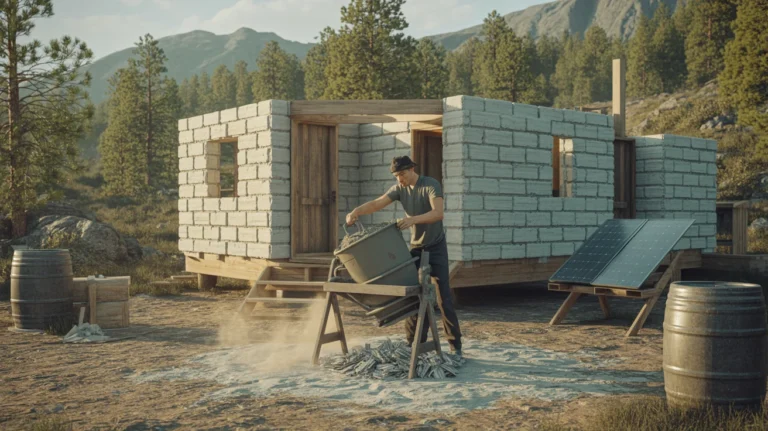
How to Make Papercrete (Step-by-Step Process)
This is the core section most people are searching for when they look up how to make papercrete. While papercrete is forgiving and flexible, following a clear step-by-step process ensures stronger blocks, faster drying, and better insulation performance—especially for off-grid builds where mistakes can be costly.

Step 1: Collect and Prepare the Paper
Start by gathering clean, dry paper. Newspaper and plain cardboard work best. Tear or shred the paper into small pieces to speed up absorption. Anyone serious about learning how to make papercrete quickly discovers that smaller paper pieces create smoother pulp and more consistent blocks.
Soak the paper in water for 12–24 hours. The goal is to fully saturate and soften the fibers.
Step 2: Create the Paper Pulp
After soaking, the paper must be pulped. This is done using:
-
A cement mixer
-
A heavy-duty drill with a mixing paddle
-
A homemade barrel mixer
Add soaked paper and enough water to allow free movement. Mix until the paper breaks down into a thick, oatmeal-like pulp. This pulping stage is essential in how to make papercrete because uneven pulp leads to weak spots.
Step 3: Add the Binder
Once the pulp is consistent, slowly add your binder:
-
Portland cement (most common)
-
Lime or clay (for alternative mixes)
A typical starting ratio for beginners learning how to make papercrete is:
-
3–4 parts paper pulp
-
1 part cement
Mix thoroughly until the binder is evenly distributed. Avoid overwatering at this stage.
Step 4: Adjust Consistency
The ideal papercrete mix should be:
-
Wet enough to pack into molds
-
Dry enough to hold shape when released
If water squeezes out easily, the mix is too wet. If it crumbles, add small amounts of water and remix. Fine-tuning consistency is a skill that improves quickly as you practice how to make papercrete.
Step 5: Fill the Molds
Pack the mixture firmly into molds. Press out air pockets, but don’t over-compress—trapped air contributes to insulation. Remove the molds carefully after initial setting, usually within 12–24 hours.
Step 6: Dry and Cure
Drying is the longest phase of how to make papercrete. Blocks must dry slowly and evenly:
-
Place on raised racks
-
Turn blocks regularly
-
Protect from rain
Depending on climate, drying can take 2–4 weeks. Patience here prevents cracking and mold.
Step 7: Final Curing
After blocks feel dry, allow additional curing time before building. Cement-based papercrete continues strengthening over several weeks.
For long-term off-grid projects, builders often combine papercrete construction with sustainable living systems such as The AquaTower to ensure water availability throughout curing and everyday use.
Mastering this process is the most important step in truly understanding how to make papercrete correctly and reliably.
What Is the R-Value of Papercrete?
One of the most common reasons people research how to make papercrete is its insulation performance. When building off-grid, insulation directly affects heating, cooling, and energy consumption. Papercrete stands out because it combines structural infill with thermal resistance in a single material.
Understanding R-Value in Building Materials
R-value measures a material’s resistance to heat flow—the higher the number, the better the insulation. Traditional concrete has a very low R-value, which is why off-grid builders often look for alternatives when researching how to make papercrete.
Papercrete R-Value Explained
The R-value of papercrete varies depending on:
-
Paper-to-cement ratio
-
Density of the mix
-
Block thickness
-
Moisture content
On average, papercrete has an estimated R-value of 2.0–3.5 per inch. This makes it significantly more insulating than concrete and closer to adobe or straw-based materials.
For example:
-
A 10-inch-thick papercrete wall may reach R-20 to R-30
-
Traditional concrete walls average R-1 per inch
This high insulation is a direct result of trapped air within the cellulose fibers—an important benefit when learning how to make papercrete for off-grid homes.
Papercrete vs Other Off-Grid Materials
Compared to common alternatives:
-
Concrete: Very strong, poor insulation
-
Adobe: Moderate insulation, heavy
-
Straw bale: Excellent insulation, larger footprint
Papercrete offers a balance of lightweight handling and thermal performance, especially for non-load-bearing applications.
Climate Considerations
In cold climates, papercrete helps retain heat. In hot climates, it slows heat transfer, improving indoor comfort. However, moisture control is critical—wet papercrete loses insulation efficiency. This is why builders learning how to make papercrete focus heavily on proper sealing and design.
For off-grid builders planning energy independence, good insulation reduces the size and cost of energy systems. Many people combine insulated papercrete structures with backup power solutions like the Ultimate OFF-GRID Generator to maintain comfort without grid reliance.
Understanding the R-value is essential when deciding whether how to make papercrete fits your off-grid building goals.
Is Papercrete Fire Resistant?
Fire safety is a major concern for anyone researching how to make papercrete, especially for off-grid homes located far from emergency services. While paper is normally associated with flammability, papercrete behaves very differently once mixed and cured.
Why Papercrete Resists Fire
Papercrete’s fire resistance comes from two key factors:
-
The cement or lime binder encases the paper fibers
-
The low oxygen content inside the material
Once cured, papercrete does not burn easily. Instead of igniting like loose paper, it tends to char slowly when exposed to direct flame. This characteristic is one reason how to make papercrete has gained traction in alternative building communities.
Fire Testing and Real-World Performance
Informal fire tests conducted by builders show that:
-
Papercrete blocks resist open flame longer than untreated wood
-
Flames often self-extinguish once the heat source is removed
-
The outer surface may char, but internal combustion is limited
The fire resistance improves when:
-
Higher cement ratios are used
-
Blocks are fully cured and dry
-
Exterior surfaces are plastered or sealed
Anyone serious about how to make papercrete for living spaces should always add a protective exterior finish for safety and durability.
Comparison to Traditional Materials
Compared to common building materials:
-
Wood: Burns readily without treatment
-
Concrete: Non-combustible but poor insulation
-
Papercrete: Fire-resistant and insulating
This balance makes papercrete appealing for off-grid cabins, studios, and accessory structures.
Fire Safety in Off-Grid Living
Off-grid homes often rely on wood stoves, solar systems, or backup generators. Combining fire-resistant building materials with smart energy planning is essential. Builders frequently pair papercrete construction with resilient off-grid systems and preparedness resources like The Lost Superfoods to enhance overall self-reliance and safety.
While no DIY material is completely fireproof, understanding fire behavior is an important part of learning how to make papercrete responsibly.
Disadvantages of Papercrete You Must Know
Anyone seriously researching how to make papercrete should understand its disadvantages just as clearly as its benefits. While papercrete is an excellent material for many off-grid applications, it is not a miracle solution. Knowing the limitations helps you design smarter, safer, and more durable structures.

1. Not Load-Bearing
One of the biggest drawbacks of papercrete is that it cannot support structural loads. Papercrete is best used as:
-
Infill walls
-
Insulation blocks
-
Non-load-bearing partitions
When learning how to make papercrete, builders must plan a structural frame using wood, steel, or reinforced concrete to carry roof and floor loads.
2. Moisture Sensitivity
Papercrete can absorb moisture if left unprotected. This can lead to:
-
Reduced insulation performance
-
Longer drying times
-
Potential mold issues
Proper sealing, roof overhangs, and breathable plasters are essential when applying how to make papercrete in wet or humid climates.
3. Long Drying and Curing Time
Unlike conventional concrete, papercrete takes weeks to fully dry. In off-grid builds, this requires careful scheduling and patience. Rushing the process can cause cracking or internal moisture retention.
4. Building Code Challenges
Papercrete is not widely recognized in building codes. This can make:
-
Permits difficult to obtain
-
Insurance harder to secure
Many off-grid builders choose remote or rural locations where code enforcement is minimal. Understanding local regulations is part of responsibly learning how to make papercrete.
5. Labor Intensive for Large Projects
Although materials are cheap, papercrete requires significant hands-on labor. Mixing, molding, and drying hundreds of blocks can be physically demanding.
Is Papercrete Still Worth It?
For off-grid builders who value self-reliance, low cost, and sustainability, these disadvantages are often acceptable trade-offs. Pairing smart construction choices with broader homesteading strategies—such as those found in The Self-Sufficient Backyard—helps offset these challenges.
Understanding the disadvantages is a critical part of mastering how to make papercrete the right way.
Best Uses for Papercrete in Off-Grid Living
Understanding how to make papercrete also means knowing where it performs best. Papercrete shines in specific off-grid applications where insulation, cost savings, and sustainability matter more than structural strength.

Ideal Applications for Papercrete
1. Infill Walls
The most common use of papercrete is as infill between structural framing. Timber, steel, or post-and-beam frames provide strength, while papercrete fills the wall cavity with insulation and mass.
2. Off-Grid Cabins and Tiny Structures
Papercrete works exceptionally well for:
-
Cabins
-
Studios
-
Guest houses
-
Workshops
Off-grid builders researching how to make papercrete often start with small structures before scaling up.
3. Domes and Earth-Integrated Designs
Papercrete is frequently used in domes, earthships, and hybrid natural buildings. Its lightweight nature makes it easier to shape into curved forms.
4. Insulated Floors and Roof Infill
When properly protected from moisture, papercrete can be used as insulation in floors and roofs—helping maintain indoor comfort year-round.
Papercrete and Complete Off-Grid Systems
Papercrete structures perform best when integrated into a holistic off-grid system. This includes:
-
Reliable power sources
-
Water collection and storage
-
Food independence
Many builders combine papercrete projects with resilient systems like the Ultimate OFF-GRID Generator to ensure energy access during construction and daily living.
When Papercrete Is NOT Recommended
Papercrete should not be used for:
-
Structural foundations
-
Load-bearing walls
-
Areas with constant water exposure
Knowing where how to make papercrete works—and where it doesn’t—is essential for long-term success.
Papercrete’s versatility makes it one of the most practical materials for off-grid builders willing to design intelligently around its strengths.
Can You Live Full-Time in a Papercrete Home?
A common question that comes up when people research how to make papercrete is whether it’s suitable for full-time living. The short answer is yes—but only when designed correctly. Papercrete homes can be comfortable, durable, and efficient if they are built with realistic expectations and proper planning.

What Makes a Papercrete Home Livable?
People who successfully live full-time in papercrete structures focus on design, not just materials. Key factors include:
-
A strong structural frame (wood or steel)
-
Proper moisture protection
-
Adequate ventilation
-
Reliable off-grid systems
Papercrete performs best as an insulating envelope rather than the main structural element. When learning how to make papercrete for long-term living, builders almost always pair it with conventional framing methods.
Comfort and Energy Efficiency
Thanks to its insulation value, papercrete helps regulate indoor temperatures:
-
Keeps interiors warmer in cold climates
-
Slows heat transfer in hot environments
This reduces reliance on heating and cooling systems—an advantage for off-grid homes. When combined with efficient power solutions, such as solar or backup systems, papercrete homes can be highly energy efficient.
Moisture Management Is Critical
Moisture is the biggest risk for full-time papercrete living. Successful builders use:
-
Large roof overhangs
-
Raised foundations
-
Breathable exterior plasters
-
Proper drainage
Ignoring moisture control is the most common mistake people make when applying how to make papercrete in permanent dwellings.
Lifestyle Considerations
Living off-grid in a papercrete home often goes hand-in-hand with lifestyle changes—simpler meals, seasonal living, and self-reliance. Many off-grid homeowners support this transition with practical resources like the Mediterranean Plan, which emphasizes sustainable, health-focused eating that aligns well with homestead living.
Realistic Expectations
Papercrete homes are not luxury builds, but they excel at:
-
Low cost of construction
-
Reduced environmental impact
-
High insulation performance
If your goal is independence rather than perfection, learning how to make papercrete can absolutely support full-time off-grid living.
Is Papercrete the Ultimate Building Material for Off-Grid Living?
After exploring every stage of how to make papercrete, it’s clear why this material has earned a strong reputation in off-grid and alternative building communities. Papercrete is not about shortcuts or gimmicks—it’s about intentional design, resourcefulness, and independence.

Papercrete offers a rare combination of benefits:
-
Extremely low material cost
-
High insulation value
-
Heavy use of recycled materials
-
DIY-friendly production
-
Compatibility with off-grid lifestyles
At the same time, learning how to make papercrete responsibly means accepting its limitations. It is not load-bearing, requires moisture protection, and demands patience during curing. Builders who succeed with papercrete are those who design around its strengths, not against them.
When paired with proper framing, smart climate design, and reliable off-grid systems, papercrete can form the backbone of a comfortable, efficient, and sustainable home or outbuilding. Many builders combine papercrete construction with holistic self-reliance systems—covering food, water, and energy—using resources like The Self-Sufficient Backyard to create truly independent homesteads.
If your goal is affordability, sustainability, and freedom from conventional systems, mastering how to make papercrete is absolutely worth your time.
Frequently Asked Questions (FAQ)
What are the disadvantages of papercrete?
The main disadvantages include:
-
It is not load-bearing
-
Long drying and curing times
-
Susceptibility to moisture if not sealed
-
Limited acceptance in building codes
These drawbacks are manageable with proper design, which is why understanding how to make papercrete correctly is essential.
What are the ingredients in papercrete?
Papercrete is made from:
-
Recycled paper (usually newspaper or cardboard)
-
Water
-
A binder such as cement, lime, or clay
Optional additives like sand or borax may be included depending on climate and use.
What is the R-value of papercrete?
Papercrete typically has an R-value of 2.0–3.5 per inch, depending on density and mix ratio. Thicker walls can reach insulation levels suitable for off-grid homes.
Is papercrete fire resistant?
Yes, papercrete is fire resistant, not fireproof. The cement binder limits oxygen exposure, causing it to char rather than burn. Proper curing and exterior finishes improve fire resistance.
Can papercrete be used for full-time living?
Yes. Many people live full-time in papercrete homes when:
-
Structural framing is used
-
Moisture is well controlled
-
Off-grid systems are properly designed
Learning how to make papercrete with long-term living in mind is the key to success.